
How Lawn Grub Prevention Works for Utah Lawns
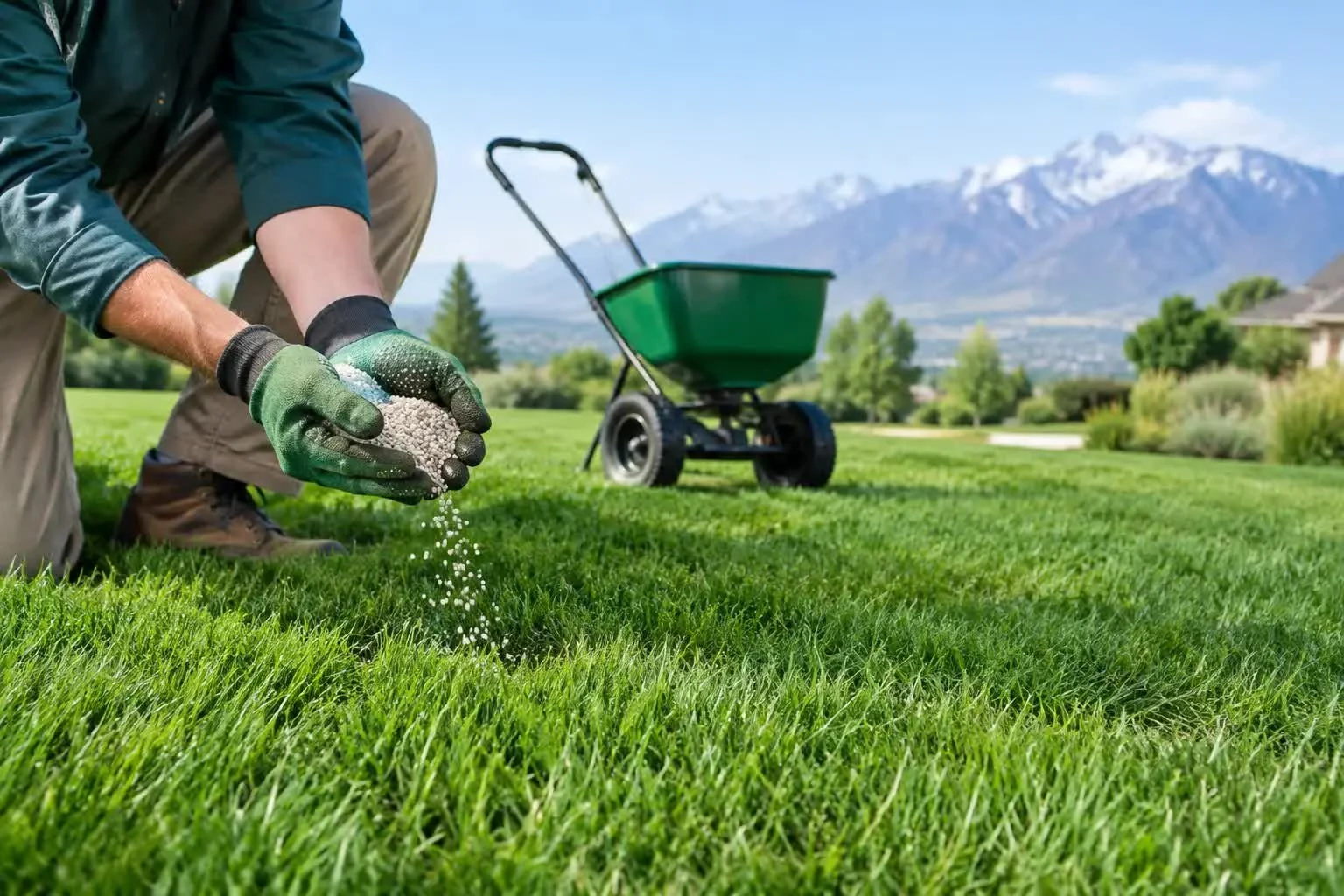
A lawn can look perfectly fine in June and still be quietly setting up a grub problem for late summer. That is why understanding how lawn grub prevention works matters more than waiting for brown patches, loose turf, and birds treating your yard like an all-you-can-eat buffet.
Grub prevention is not a rescue treatment for a lawn that is already falling apart. It is a timed, proactive application that stops young grubs before they have the chance to chew through enough roots to damage your turf. When it is applied at the right time and watered in correctly, it gives your lawn a much better shot at staying green, rooted, and usable through Utah's hot, dry stretches.
What lawn grubs are actually doing underground
Lawn grubs are the immature stage of certain beetles. Adult beetles lay eggs in the soil during the warmer months. When those eggs hatch, the small white, C-shaped larvae begin feeding on grass roots.
A few grubs are normal. Healthy lawns can often tolerate a small population without showing obvious damage. Trouble starts when there are enough grubs feeding in one area that the grass can no longer take up the water and nutrients it needs.
The first signs can be easy to mistake for drought stress: thinning grass, patches that brown faster than the rest of the lawn, or areas that do not improve after watering. As feeding gets worse, the sod may pull up surprisingly easily because the roots below it have been eaten away. Skunks, raccoons, and birds may also dig for grubs, creating a second mess on top of the root damage.
How lawn grub prevention works before damage starts
Preventive grub control is designed to be in the root zone when newly hatched grubs begin feeding. Depending on the treatment used, the product is absorbed by the grass or remains available in the soil where young grubs encounter it. Once the grubs start feeding on treated roots, they are controlled while they are still small and far less destructive.
That timing is the whole game. Young grubs are easier to control than large, established grubs later in the season. A prevention treatment does not need to wait until you see damage because, by that point, the lawn may already need repair in addition to pest control.
Think of it like putting a lock on the gate before the dog gets out. You can still solve the problem afterward, but it tends to involve more running around.
Prevention is different from a curative treatment
A preventive treatment is scheduled around the beetle and grub life cycle. It is meant to provide protection during the period when eggs hatch and small grubs begin feeding.
A curative treatment is used when active grubs are already present and causing damage. It can be effective, but results depend more heavily on the grub's size, soil conditions, and how quickly the treatment is applied. Late-season grub damage can also leave bare or weakened areas that need overseeding, better irrigation, or other lawn recovery work.
For homeowners who have had grub damage before, prevention is usually the simpler and more cost-effective route. For lawns with no history of grub activity, the decision depends on local beetle pressure, the condition of the lawn, and whether nearby properties have seen problems.
When to apply grub prevention in Utah
The best window for grub prevention depends on weather, elevation, and the species of beetle active in the area. In northern Utah, preventive applications are commonly planned from late spring into early summer, before the main wave of egg hatch and early grub feeding.
The exact date should not be treated like a fixed holiday on the calendar. A cool spring can slow insect development, while unusually warm conditions can move activity forward. A local lawn professional can account for those seasonal shifts instead of applying treatment simply because a certain month arrived.
If your lawn had grubs last year, do not wait until the same brown patches show up again. Make prevention part of the early-season lawn plan. That gives the treatment time to reach the soil and be ready when young grubs appear.
Watering is part of the treatment, not an afterthought
Most granular or liquid grub prevention treatments need water to move the active ingredient into the root zone. If a lawn is treated and then stays dry, the product may sit too close to the surface instead of reaching the area where grubs feed.
Your technician should provide clear watering instructions based on the treatment and current weather. In general, prompt irrigation after application is often needed, while avoiding overwatering that creates runoff. If rain is expected soon, that may help, but counting on a storm that barely drops a few sprinkles is not a great lawn-care strategy.
Watering practices matter beyond application day, too. Grass with deeper, healthier roots handles stress better and can tolerate minor insect feeding more effectively than thin turf growing in compacted soil. Grub prevention works best as one piece of sound lawn care, alongside appropriate fertilization, mowing, and irrigation.
A healthy lawn helps, but it cannot do all the work
It is tempting to assume that fertilizer alone will prevent grubs. It will not. Fertilizer supports grass growth, but it does not stop beetle eggs from hatching or larvae from feeding on roots.
Still, lawn health changes how visible and severe grub damage becomes. A stressed lawn may show damage quickly, especially during summer heat. A thick lawn with good root development has more cushion, although a heavy grub population can overwhelm even well-maintained turf.
Avoid extremes. Cutting grass too short can stress it. Overwatering can encourage shallow roots and waste water. Heavy fertilizer applications at the wrong time can create growth that is hard to sustain. The right approach is steady care tailored to your grass type, soil, sun exposure, and irrigation setup.
Does every lawn need annual grub prevention?
Not necessarily. There is no reason to sell every homeowner the same treatment without looking at the lawn first. Annual prevention is most useful for properties that have had past grub damage, recurring beetle activity, animal digging, or neighborhoods where grub problems are common.
Lawns with a history of root damage deserve special attention. So do properties near irrigated turf, golf-course-style landscaping, or areas where adult beetles are regularly seen. If your lawn has never had grubs and there is little local activity, monitoring may be a reasonable first step.
A proper inspection helps separate grub damage from other common Utah lawn issues. Drought stress, dog spots, irrigation coverage problems, fungal disease, and poor soil can all cause brown areas. Pulling gently on a damaged patch and checking below the surface can reveal whether roots are gone and grubs are present. Guessing is how people end up treating the wrong problem.
What a practical prevention plan looks like
A good plan begins with your lawn's history. If grubs damaged turf last year, schedule prevention before peak hatch. If you are unsure, inspect suspicious areas and watch for unusual beetle activity or wildlife digging.
Next, apply the appropriate preventive treatment within the seasonal window and follow watering directions carefully. Then keep the lawn on a sensible care schedule rather than trying to fix every brown spot with extra water or fertilizer.
For households that already use seasonal lawn fertilization and weed control, adding grub prevention can be an efficient way to protect the roots those services are working to strengthen. Safe Chem Pest also offers lawn care alongside pest, mosquito, and tree services, with straightforward bundle savings for customers who need more than one kind of outdoor protection.
The goal is not to turn your yard into a chemistry experiment. It is to use targeted prevention when the risk and timing make sense, protect the lawn's root system, and avoid the bigger repair job that can follow an unchecked grub season.
If your grass has pulled up like loose carpet, you may need a curative solution and lawn recovery advice now. If it is still healthy, the better move is simple: plan ahead, treat at the right time, water it in, and let your lawn spend summer growing instead of feeding grubs.