
Safest Indoor Pest Control for Your Home
That moment when you spot an ant trail by the pantry or a spider dropping from the ceiling fan tends to trigger two thoughts at once: get rid of it now, and please don’t coat my house in harsh chemicals. That tension is exactly why people search for the safest indoor pest control. They want something that works, but they also want to feel comfortable letting their kids crawl on the floor and their pets nap in the usual sunny spot.
The honest answer is that “safest” does not always mean “zero product” and it does not always mean “all natural” either. Good indoor pest control is usually about using the least invasive method that still solves the problem. In many homes, that means a mix of exclusion, sanitation, monitoring, and targeted treatment instead of broad indoor spraying just because a bug showed up once.
What safest indoor pest control really means
If a company promises pest control with no risk, that is marketing, not reality. A safer approach means reducing exposure while still being effective. That starts with proper identification. Ants, spiders, cockroaches, silverfish, and rodents all behave differently, and using the wrong treatment often leads to more product, more frustration, and worse results.
The safest indoor pest control also depends on who lives in the home. A household with a crawling toddler, a cat that licks everything, or a family member with respiratory sensitivity may need a different plan than a vacant rental between tenants. Safety is not one-size-fits-all. It is a practical conversation about exposure, placement, frequency, and whether indoor treatment is even necessary.
In many cases, the safest move indoors is to do less there and more outside. A targeted exterior treatment can reduce the number of pests entering the home in the first place, which means less need for indoor applications. That is often the sweet spot for families who want strong protection without turning the inside of the house into a chemistry project.
The methods that are usually safest indoors
The best indoor pest plans are boring in the best possible way. They rely on methods that are controlled, deliberate, and low-contact.
Inspection and pest identification
This is where everything starts. Seeing one bug does not always mean you need a full-house treatment. A proper inspection looks at where pests are entering, what is attracting them, and whether the issue is isolated or active throughout the home. It also helps rule out over-treatment, which is one of the biggest mistakes in pest control.
Exclusion and physical prevention
Sealing gaps around doors, windows, utility lines, and baseboards is about as safe as pest control gets. So is fixing torn screens, reducing moisture under sinks, and storing food in sealed containers. These steps are not glamorous, but they remove the conditions pests like most.
For rodents, traps are often a better indoor option than widespread rodenticide use. For crawling insects, sticky monitors can help identify where activity is happening without introducing unnecessary product into living areas.
Targeted baits and crack-and-crevice treatments
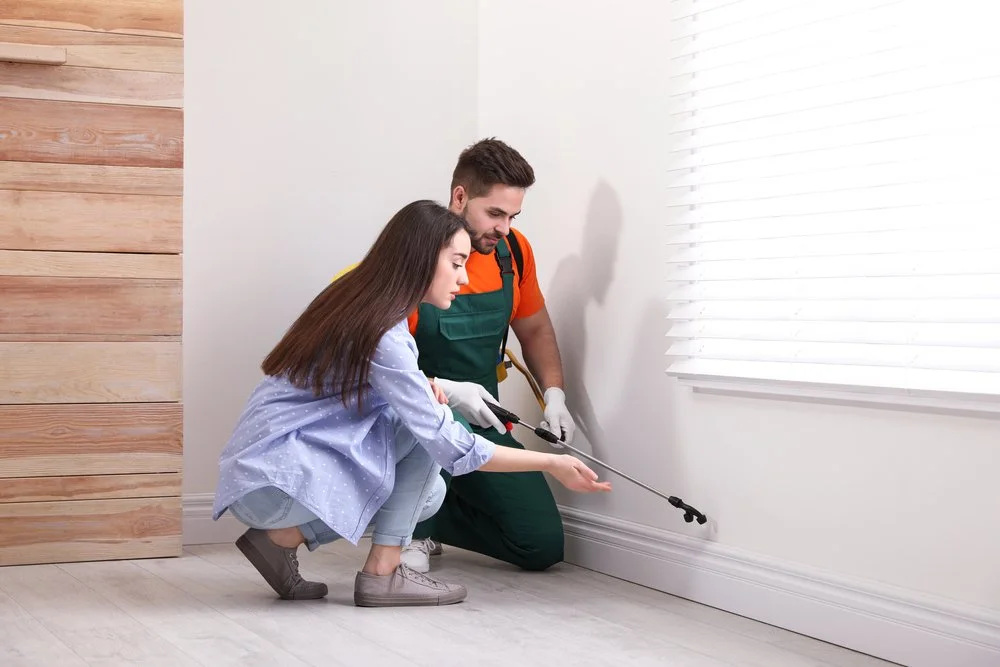
When treatment is needed, precise placement matters. A bait placed where ants are actually foraging is very different from spraying baseboards wall to wall just to feel like something happened. Crack-and-crevice applications keep material in tight, low-contact areas instead of open surfaces where kids and pets spend time.
This is one reason professional treatment can be safer than DIY guesswork. A trained technician should know where product belongs, where it does not, and how little is needed to get the job done.
Organic or low-impact indoor products
Some companies offer fully organic indoor applications or low-odor products designed for sensitive households. That can be a strong option, especially when paired with targeted exterior service. But organic does not automatically mean more effective, and synthetic does not automatically mean unsafe. The better question is how the product is used, where it is used, and whether it is appropriate for the pest.
When DIY is fine and when it starts getting risky
There is nothing wrong with handling a small issue yourself if the problem is minor and you follow label directions carefully. Cleaning up crumbs, sealing entry points, setting a few monitors, or using a simple ant bait station can make a real difference.
Where DIY tends to go sideways is when homeowners stack products. A fogger in one room, a random spray under the sink, essential oils on the counters, and bait in the pantry is not a strategy. It is just a more expensive way to stay annoyed. Mixing methods without understanding the pest can also reduce effectiveness. Some sprays, for example, can interfere with bait performance.
DIY also gets shakier with recurring infestations, rodents, stinging insects, cockroaches, and anything happening near HVAC systems, food prep areas, or hidden wall voids. If the problem keeps coming back, the safest move is often to stop experimenting and get a clear plan.
How families with kids and pets should think about indoor treatment
Parents and pet owners usually ask the right question first: what is going to be used inside my home? That should never feel like an awkward thing to ask. A good provider should explain the treatment plainly, including where it will be applied, whether there are reentry guidelines, and whether there are lower-impact alternatives.
For many households, the safest indoor pest control plan looks like this: minimal indoor product, targeted placement only where needed, and stronger prevention outdoors. That approach reduces exposure and often improves long-term control because the real battle is usually at entry points and nesting areas, not in the middle of your living room.
It also helps to prepare the home properly. Clear clutter from treatment areas, store pet bowls and toys temporarily if advised, and follow any post-treatment instructions exactly. Most problems in pest control do not come from the product itself. They come from poor application, poor communication, or poor follow-through.
Why the safest approach is not always the cheapest one-time option
A bargain treatment can cost more if it solves nothing. This is especially true when a company relies on heavy indoor applications because it is faster than careful inspection and prevention. You may pay less upfront, then pay again when the ants return in two weeks.
A safer and more effective service usually includes a real inspection, clear pricing, retreatment options, and a plan that does not depend on drenching the inside of the home every visit. That is one reason homeowners often prefer straightforward recurring service. Prevention is usually gentler than constantly reacting to an infestation after it gets established.
If you also deal with mosquitoes, lawn issues, or tree pests, bundling services can make practical sense too. One provider managing those needs can reduce the runaround, and discounts do not hurt either. If you are already paying to protect your home, yard, and outdoor living space, it makes sense to do it in a coordinated way.
Questions to ask before hiring any pest company
If you are comparing providers, skip the polished sales pitch and ask a few plain questions. Do you offer organic or low-impact indoor options? Will you treat indoors only when needed? What pests are covered? How do retreatments work? Are there contracts or cancellation fees? If the answers feel vague, keep looking.
Homeowners should also ask whether the company customizes treatment for the household. A family with infants, indoor cats, or specific health concerns should not get the same canned script as everyone else. Safer service is thoughtful service.
For Utah homeowners, that local piece matters too. Pest pressure here changes with the season. Ants surge in warm months, spiders move when temperatures shift, wasps get aggressive around eaves, and rodents start looking for shelter when it cools down. A local provider should understand those patterns and adjust treatment without making it complicated.
Safe Chem Pest has built a lot of its approach around that exact idea - simple plans, family-conscious treatment options, and no-pressure service that does not trap people in contracts just to keep coverage in place.
The safest indoor pest control is usually the smartest one
People often picture pest control as a choice between doing nothing and spraying everything. Most of the time, the best answer sits in the middle. Use prevention first. Treat only where needed. Keep products targeted, not broadcast. And work with someone who explains the plan like a neighbor, not like a used car ad with a pesticide license.
If your home has a recurring pest problem, peace of mind comes from a method that is both careful and effective. You should not have to choose between protecting your family and protecting your house.