
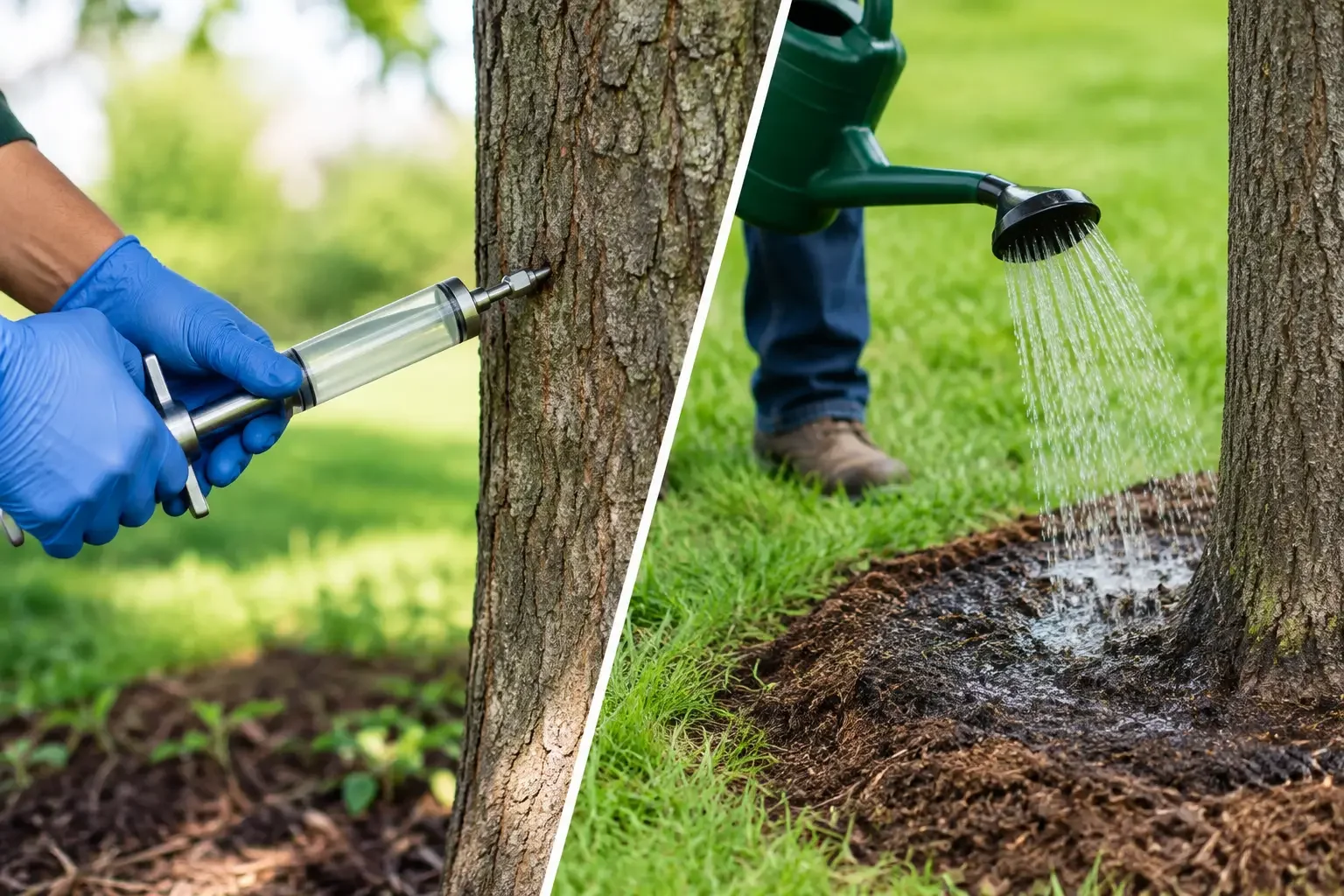
A prized maple with thinning leaves, a spruce turning dull, or an ash under insect pressure can make a homeowner want the fastest treatment available. But trunk injections versus soil drenches is not a simple contest with one winner. The right choice depends on the pest or disease involved, the tree species and size, the time of year, nearby water, and how quickly the tree needs help.
Both methods can be effective when they are used for the right problem. Both can also disappoint when treatment is chosen before the cause is identified. A tree does not care whether a treatment sounds high-tech. It needs the correct active ingredient delivered at the correct time, along with enough water, root health, and follow-up care to recover.
What Is the Difference Between Trunk Injections and Soil Drenches?
A trunk injection places a measured treatment directly into the tree's vascular system through small ports in the trunk. The tree moves the material upward with its water flow, carrying it into branches and leaves. Professionals commonly use injections for certain insect problems and some nutrient or disease-management needs.
A soil drench is applied to the ground around the base of the tree, usually within the root zone. The roots absorb the treatment, then the tree transports it upward. This approach may be used for systemic insecticides, fertilizers, and certain soil-applied products.
Neither option should be treated as a universal tree tonic. They are delivery methods, not diagnoses. A drought-stressed tree, for example, may need better irrigation and mulch more than it needs any pesticide.
When Trunk Injections Make Sense
Trunk injections are often the practical choice when a tree needs targeted treatment without applying product across the soil surface. Because the material is placed inside the tree, there is generally less concern about soil movement around nearby gardens, sidewalks, or waterways. That can be particularly valuable in tight residential landscapes.
They are also useful when speed and precision matter. A properly timed injection can move through an actively transpiring tree more directly than a root-applied treatment, though it still takes time for the material to reach the canopy. For pests feeding high in a mature tree, such as certain borers or sap-feeding insects, that targeted delivery can be a major advantage.
In Utah, injections can be appealing for larger ornamental trees that have limited root-zone space due to rock landscaping, compacted soil, or hardscape. If a lawn, driveway, and flowerbeds have claimed most of the ground around the trunk, getting a soil-applied treatment evenly into active roots can be difficult.
There are trade-offs. Injections create small wounds, and repeated drilling in the same general area is not something to take casually. A trained technician should use appropriate equipment, placement, spacing, and timing for the tree and product. Injections may also cost more per tree because they require hands-on work and are often used for larger or higher-value trees.
A stressed tree may not move an injected treatment well. Trees rely on water movement to distribute material, so severe drought, root damage, or poor overall vigor can reduce results. Putting medicine into a tree with no functional plumbing does not solve the plumbing problem.
Best situations for injections
Trunk injections are often worth considering when a mature tree has a confirmed pest issue, treatment needs to stay highly contained, or a quick, targeted response is preferred. They can also make sense where soil applications are restricted by nearby water, edible plants, or limited access to the root zone.
When Soil Drenches Are the Better Fit
Soil drenches are usually less invasive because there is no drilling into the trunk. When applied correctly, the treatment is taken up through roots and distributed through the tree. For smaller trees or preventative programs, this can be an efficient and cost-conscious option.
A soil drench can also treat a broad root zone, which is helpful when the product is intended to work through root uptake. It may be a good fit for established landscape trees with healthy, accessible soil and a known seasonal pest history. Timing matters a great deal. Many systemic soil treatments need to be applied well before pests reach damaging levels because the tree needs time to absorb and distribute the product.
That lead time is where homeowners can get caught off guard. If leaves are already being stripped or insects are actively causing heavy damage, a soil drench may not provide a fast enough response. Applying extra product does not make the tree absorb it faster. It just creates unnecessary risk and expense.
Soil conditions matter, too. Very dry soil can limit uptake. Compacted clay, shallow roots, overly wet ground, and poor irrigation can all affect how a treatment performs. In northern Utah's hot, dry stretches, watering a tree properly before and after a root-zone treatment may be part of getting the intended result.
Soil applications must also be chosen carefully around pollinator-friendly landscapes and flowering plants. Some systemic insecticides can move into pollen and nectar, depending on the product, plant, timing, and application. A responsible tree care plan considers that risk rather than treating every insect sighting as an emergency.
Trunk Injections Versus Soil Drenches: The Real Decision Factors
The best treatment begins with identifying the actual issue. Leaf discoloration might come from insects, fungal disease, heat stress, irrigation problems, root decline, nutrient imbalance, or late frost damage. Treating the wrong cause is an expensive way to stay frustrated.
Tree size changes the equation. A small young tree may respond well to a properly timed soil treatment, while an established shade tree can require a more targeted injection approach. Species matters as well. An ash, pine, maple, elm, and spruce do not all have the same pest pressures or respond the same way to products and timing.
The urgency of the problem is another deciding factor. Soil drenches are often better for planned prevention because they need time to work. Injections may be more useful when a confirmed problem requires a focused treatment during the growing season. Even then, neither method is instant. A tree needs time to move and use what it receives.
Finally, consider the site. A healthy root zone with open soil favors soil-applied options. Tight landscaping, sensitive areas, or concerns about off-target soil exposure may favor injections. A professional should explain why a method is being recommended, not simply sell the most expensive option.
Treatment Is Only One Part of Tree Protection
Many tree problems get worse because the tree is already under stress. Proper watering, especially deep watering during dry periods, is one of the most useful things a homeowner can do. Keep mulch a few inches away from the trunk, avoid piling decorative rock against the bark, and do not damage roots with frequent digging or construction work.
Pruning can help in some cases, but random heavy pruning can make matters worse. Remove dead or hazardous branches as needed, and have pest-damaged trees evaluated before cutting away large portions of the canopy. Healthy foliage is how a tree produces energy for recovery.
It also helps to set realistic expectations. Treatments can protect new growth, reduce pest populations, or slow decline, but they cannot always reverse damage that has already occurred. A tree with major root loss or extensive canopy dieback may need a broader plan than an injection or drench alone.
A Straightforward Way to Choose
If you are deciding between these treatments, start by asking three practical questions: What is actually harming the tree, how soon does control need to happen, and is the root zone suitable for a soil-applied product? Those answers usually point toward the better method.
At Safe Chem Pest, the goal is not to make tree care sound mysterious or push a treatment that does not fit. A clear inspection and honest recommendation are more useful than a one-size-fits-all fix. When a valuable tree is involved, choosing the right method early can preserve shade, curb appeal, and a lot of future hassle.
Your trees have been working hard through heat, wind, compacted soil, and unpredictable weather. Give them a treatment plan that matches the problem, then support it with steady care. That is usually where the best results grow.