
A Guide to Tree Disease Prevention in Utah
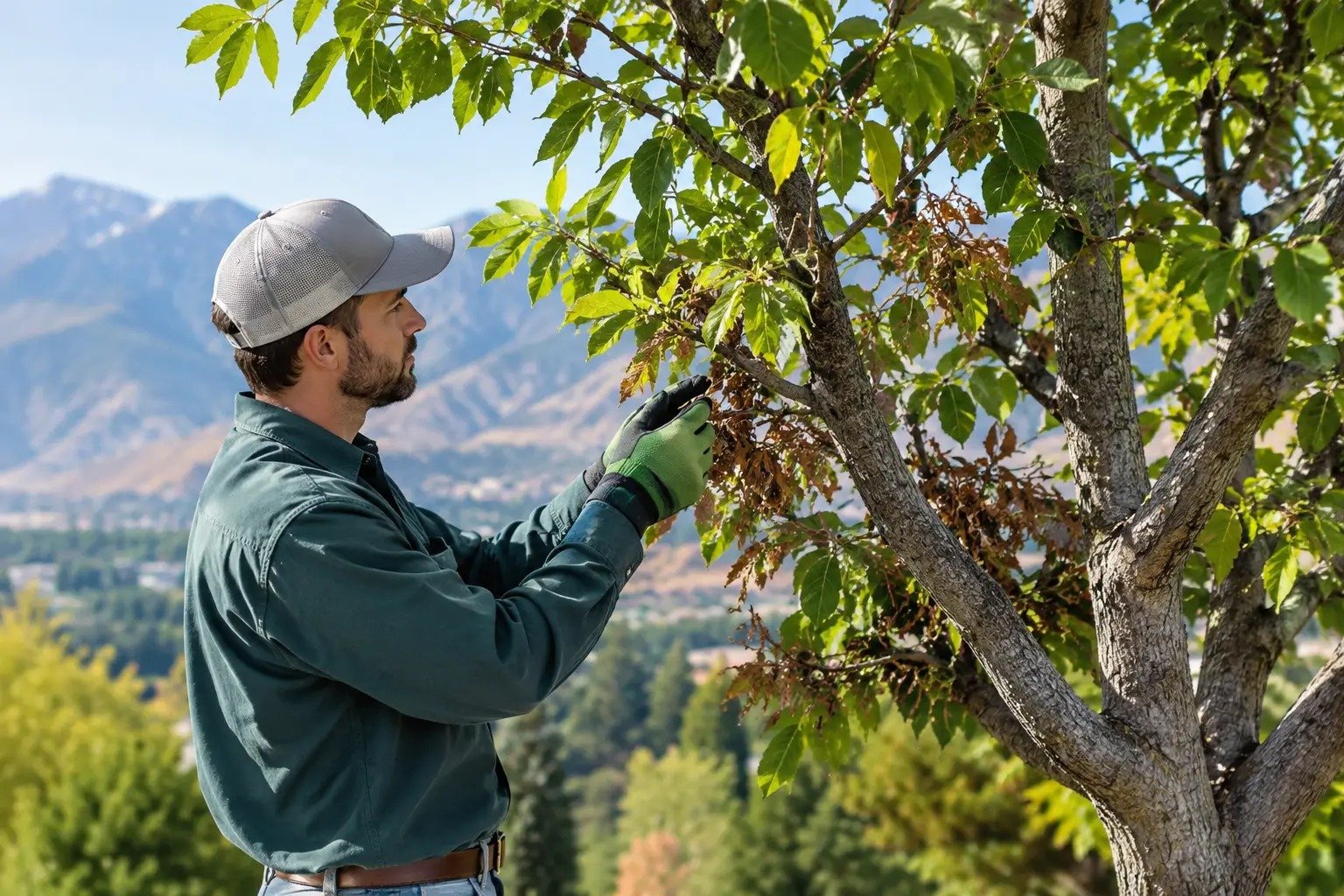
A healthy-looking tree can go downhill faster than most homeowners expect. One week the canopy seems fine; the next, leaves are curling, branches are thinning, or bark is showing odd spots. This guide to tree disease prevention is built for Utah homeowners who want to protect their trees before a small stress problem becomes an expensive removal job.
Tree disease prevention is not about spraying every tree in the yard and hoping for the best. It is about reducing the conditions that let disease take hold: drought stress, poor drainage, damaged bark, compacted soil, overcrowded branches, and insects that carry or worsen disease. A little attention at the right time goes much farther than a last-minute treatment after half the tree has declined.
Start With the Stress Factors Trees Cannot Ignore
Trees are remarkably tough, but they are not invincible. In northern Utah, hot dry summers, sudden temperature swings, alkaline soil, compacted new-construction lots, and inconsistent watering can all create stress. A stressed tree has fewer resources to fight off fungi, bacteria, boring insects, and other problems.
Water is usually the first place to look. Lawns and trees do not always need the same watering schedule. Shallow, frequent lawn watering may keep grass green while leaving a mature tree's deeper root zone thirsty. On the other hand, soil that stays wet around the trunk can encourage root problems. The goal is deep, appropriate watering that reaches the roots without creating a permanently soggy planting area.
How often that means watering depends on the tree species, its age, soil type, slope, and the weather. A newly planted tree needs more regular help than an established shade tree. Clay-heavy soil holds water longer than sandy soil. Rather than following a rigid calendar, check moisture several inches below the surface near the root zone. If it is dry where the roots actually live, the tree likely needs a slow, deep soak.
Use Mulch Correctly, Not Like a Volcano
Mulch is one of the simplest ways to support tree health. It helps soil hold moisture, moderates temperature changes, and reduces competition from grass and weeds. But the classic mulch volcano piled against the trunk does the opposite of what homeowners want. It traps moisture against bark, can encourage decay, and gives pests a cozy place to hide.
Keep a 2- to 4-inch layer of mulch over the root area, then pull it back a few inches from the trunk. Think of a flat donut, not a mountain. Wood chips work well, but any mulch should be kept loose enough for air and water to move through it.
Also, protect the trunk from mechanical damage. String trimmers, lawn mower bumps, construction equipment, and even tight ties around a young tree can create wounds. Those wounds may become entry points for disease and insects. Trees do not heal damaged tissue the way people do. They compartmentalize it, so avoiding the injury in the first place matters.
Prune for Airflow and Structure
Proper pruning can reduce disease risk by removing dead, rubbing, damaged, and crowded branches. Better airflow and light penetration help foliage dry more quickly after rain or irrigation, which makes conditions less inviting for many fungal problems.
The catch is that over-pruning creates stress. Removing too much canopy at once can leave a tree struggling with sun exposure and reduced energy production. Topping a tree is especially harmful. It leaves large wounds, produces weak regrowth, and often starts a cycle of decline and repeated maintenance.
For small branches, use clean, sharp tools and make cuts just outside the branch collar, the slightly swollen area where the branch joins the trunk or larger limb. Do not leave long stubs, and do not cut flush against the trunk. If a tree has large limbs, extensive dieback, or branches near power lines, bring in a qualified tree professional instead of turning Saturday afternoon into an emergency.
Clean Tools Between Problem Trees
If you are pruning a tree with suspicious leaf spots, cankers, or dieback, clean pruning tools before moving to another tree. A disinfectant appropriate for garden tools can reduce the chance of carrying pathogens from one plant to the next. It is a small step, but it is especially worthwhile when several fruit trees or ornamental trees are growing close together.
Watch for Early Warning Signs
Many tree diseases look similar at first, and nutrient problems, drought stress, insect injury, and herbicide damage can all mimic disease. You do not need to diagnose every spot on every leaf. You do need to notice changes early enough to act.
Pay attention when you see:
Leaves that yellow, brown, curl, spot, or drop much earlier than normal
Branch tips that die back while other parts of the tree still look healthy
Cracked, sunken, oozing, or discolored areas on bark
Mushrooms or fungal growth around the base of the tree
Thinning canopies, unusually small leaves, or sparse growth year after year
Fine sawdust-like material, small holes, or loose bark that may signal boring insects
One damaged leaf is not a crisis. A repeating pattern across the canopy, several affected branches, or a problem that returns each year deserves a closer look. Take a few clear photos and note when symptoms appeared. That information helps a professional separate a seasonal issue from a disease that needs treatment.
Keep Insects From Making Disease Worse
Some insects do more than chew leaves. Borers and sap-feeding insects can weaken a tree, create wounds, or help introduce pathogens. Trees already stressed by drought, poor soil, or root damage are often more attractive targets.
This is why tree protection is not just about reacting after insects are obvious. Targeted preventive treatments may be appropriate for trees with a history of damaging pests or for species known to be vulnerable in a particular neighborhood. The right approach depends on the tree, the pest pressure, and the time of year. Blanket treatments without a clear reason are not necessarily better, and they can waste money.
A practical inspection looks at the whole picture: the tree species, watering pattern, soil conditions, recent construction, visible insects, canopy symptoms, and nearby affected trees. That is how you avoid treating the wrong problem. A fertilizer application will not cure a root rot issue, and an insect treatment will not fix poor drainage.
Fertilize for Health, Not for Fast Growth
Fertilizer can help when a tree has a genuine nutrient need, but more is not automatically better. Heavy or poorly timed fertilization can force tender new growth that is more susceptible to stress and certain pests. It can also add salt to already challenging Utah soils.
The best fertilization plan is based on the tree's condition and the soil, not a one-size-fits-all schedule. Young trees, mature shade trees, fruit trees, and ornamentals have different needs. If a tree is struggling, first rule out watering problems, root damage, disease, and insects. Fertilizer is support, not magic dust.
Know When to Call for Professional Help
Home care handles many prevention basics, but some symptoms should not wait. Call for an evaluation when a tree has sudden major leaf loss, large dead limbs, extensive bark damage, mushrooms near the trunk, obvious borer activity, or a lean that was not there before. A declining tree near a house, driveway, play area, or sidewalk is also a safety issue, not just a landscaping concern.
For homeowners in Weber, Davis, and Salt Lake counties, local conditions matter. What affects one tree in a shaded, irrigated yard may be very different from what affects a tree on a hot, exposed slope. Safe Chem Pest can assess tree health concerns and provide targeted tree protection and fertilization options without turning the conversation into a high-pressure sales pitch.
The best time to protect a tree is when it still looks mostly healthy. Walk your yard occasionally, water with the roots in mind, keep mulch off the trunk, and treat unusual changes as a reason to investigate rather than something to ignore. Your trees have been working hard to shade the yard and make it feel like home. A little preventive care is a fair trade.