
When Should Trees Be Fertilized in Utah?
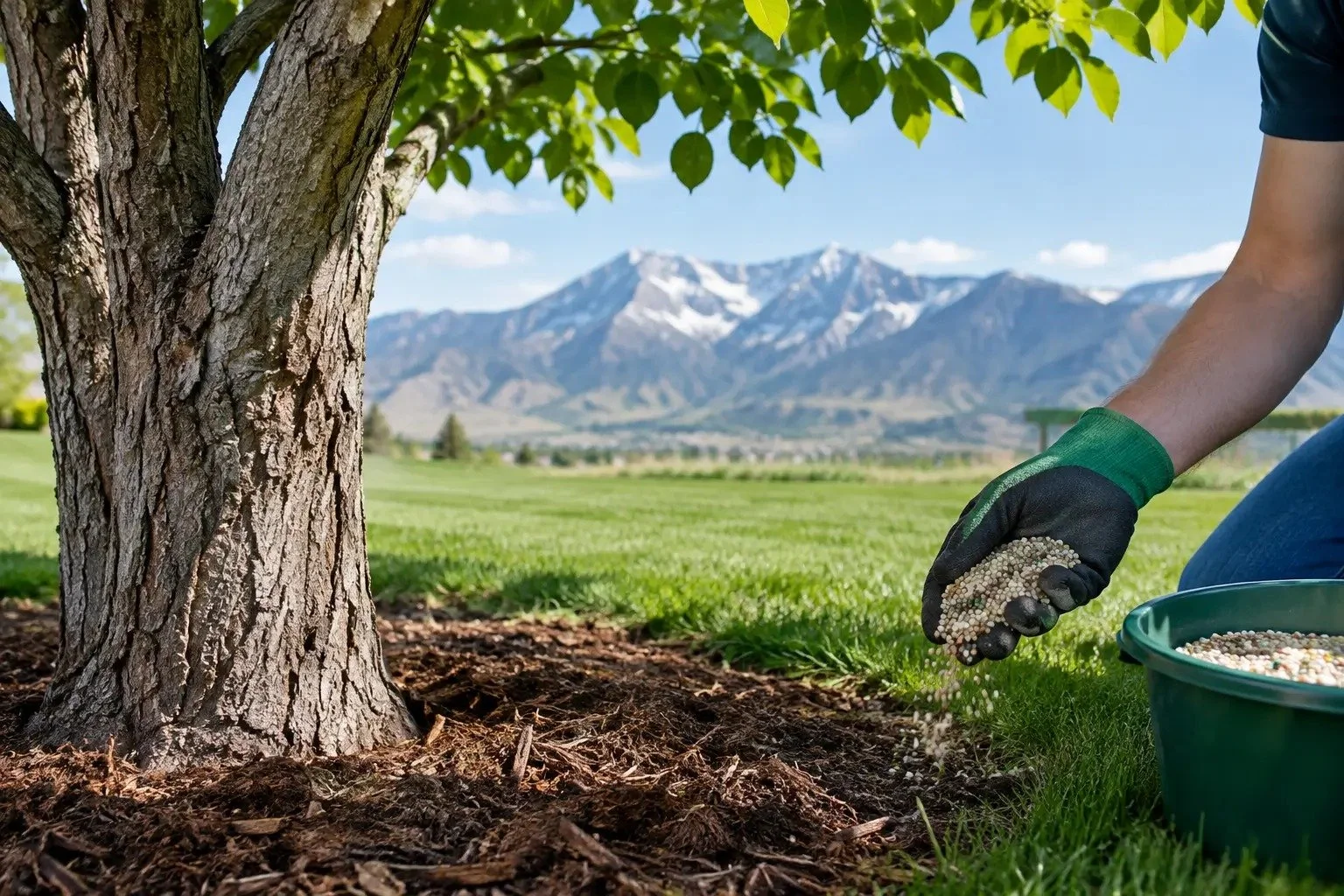
A tree that looks a little pale in May does not automatically need a scoop of fertilizer. In Utah, it may be reacting to compacted soil, dry roots, late frost, poor drainage, or our famously alkaline soil. So, when should trees be fertilized? Usually in early spring or late fall - but only after you have a good reason to feed them.
Fertilizer can help a tree correct a real nutrient shortage and put on healthier growth. Applied at the wrong time or in the wrong amount, it can do the opposite: push tender growth during hot weather, worsen stress, or send nutrients where they do not belong. Trees are not lawns. They do not need a routine feeding just because the calendar says so.
When should trees be fertilized?
For most established landscape trees, the best windows are early spring, before major new growth begins, or late fall, after leaves have dropped and before the ground freezes. Those seasons give roots a chance to take up nutrients without asking the tree to handle a burst of growth during the hottest, driest part of the year.
Early spring fertilization is often a practical choice for Utah homeowners because it supports the growing season ahead. The soil is starting to warm, and the tree is preparing to leaf out. If a tree has a documented nutrient deficiency or showed weak growth the previous year, this timing can be useful.
Late fall is another solid option, especially for deciduous trees. Once leaves are down, the tree is no longer spending energy on canopy growth, but its root system can remain active until the soil gets cold. Nutrients can be stored and used as growth resumes in spring.
The best answer still depends on the tree, the soil, and the reason for fertilizing. A healthy, mature maple in decent soil may not need regular fertilizer at all. A struggling young ornamental tree in compacted clay is a different situation.
Avoid fertilizing during summer stress
Mid-summer is usually the wrong time to fertilize trees in northern Utah. Heat, dry air, and watering restrictions can already put a tree under pressure. Nitrogen-heavy fertilizer encourages leafy new growth, which needs even more water. That is a rough trade when the roots are already trying to keep up.
Hold off if your tree is wilting, freshly planted, drought-stressed, or dealing with a major pest or disease issue. First address the cause. Deep, appropriate watering, mulch, and diagnosis often do more good than fertilizer.
It is also smart to avoid fertilizing late in the growing season, particularly with fast-release nitrogen. New growth that appears just before cold weather may not harden off properly before a freeze. The result can be winter damage rather than the healthy boost you had in mind.
Signs a tree may actually need fertilizer
Yellow leaves do not always mean a tree needs feeding. Still, a few patterns can tell you it is worth looking closer. Slow annual twig growth, smaller-than-normal leaves, sparse canopy growth, and early leaf drop can point to a nutrient issue when other causes have been ruled out.
Yellowing between green leaf veins is especially common in Utah landscapes. Many of our soils are alkaline, which can make iron difficult for certain trees to use even when iron is technically present in the soil. This is called iron chlorosis. Maples, oaks, birches, and some ornamental trees can be prone to it.
Here is the catch: general fertilizer is not always the fix for iron chlorosis. Adding more nitrogen to an iron problem can create more growth without solving the yellowing. A targeted iron treatment, soil adjustment strategy, or professional recommendation may be needed instead.
Trees growing near new construction, heavily fertilized lawns, gravel beds, or concrete may also face unusual soil conditions. Construction can compact soil and damage roots. Concrete and irrigation water can affect soil chemistry. Those are reasons to investigate before applying a one-size-fits-all product.
Start with the soil, not the fertilizer bag
A soil test is the most practical way to stop guessing. It can show soil pH, organic matter, and key nutrient levels. That information helps determine whether fertilizer is necessary and, if it is, what kind makes sense.
This matters in Utah because soil pH is often high. A fertilizer that works beautifully in another region may be a poor fit for a yard in Weber, Davis, or Salt Lake County. A test can also keep you from applying phosphorus when the soil already has plenty. More is not better, and unused nutrients can wash away with irrigation or runoff.
If testing is not practical, look at the whole picture first. Is the tree receiving deep water at the right intervals? Is mulch covering the root zone but kept several inches away from the trunk? Has the trunk been damaged by lawn equipment? Are insects, disease, or poor drainage involved? Fertilizer cannot repair bark damage or compensate for roots sitting in soggy soil.
Young trees need patience, not a heavy feeding
Newly planted trees are often over-fertilized because homeowners understandably want them to take off quickly. But the first priority is root establishment. A tree planted correctly in suitable soil usually does not need a strong fertilizer application in its first growing season.
Instead, focus on steady watering based on weather and soil conditions, not a fixed daily schedule. Add a two- to four-inch layer of mulch around the root zone, leaving a clear gap around the trunk. Mulch helps moderate soil temperature, holds moisture, and gradually adds organic matter as it breaks down. It is not flashy, but trees love it.
Once a young tree is established, a soil test or an assessment of its growth can help determine whether feeding is useful. Slow growth is not automatically bad, either. Some species simply grow at a calmer pace.
Choose the right type and application method
For trees that truly need nutrition, slow-release fertilizer is generally a safer choice than a quick, high-nitrogen product. It provides nutrients gradually and reduces the chance of a sudden flush of weak growth. The formula should be based on the soil test and the tree's specific issue, not whatever bag happens to be on sale.
Apply fertilizer across the root zone, which extends well beyond the branch tips on many mature trees. Do not pile it at the trunk. Most active feeder roots are in the upper soil and spread outward, so concentrating material against the base does not help.
Deep-root feeding can be useful in some compacted or difficult soils, but it is not a magic trick. It should be used when the tree and site call for it, not as an automatic annual add-on. The same goes for liquid treatments and trunk injections. They can be appropriate for certain nutrient deficiencies, especially iron issues, but the diagnosis comes first.
Fertilizer is only one part of tree protection
Healthy trees are better able to tolerate pests, heat, and dry spells, but fertilizer is just one piece of that equation. Proper watering, mulch, pruning at the right time, and early attention to insects or disease usually matter just as much.
If a tree has sudden browning, oozing, dieback on one side, holes in the bark, or widespread leaf loss, do not try to solve it with fertilizer and hope for the best. Those symptoms can signal a pest, disease, root problem, or environmental injury that needs a closer look.
For homeowners who would rather not play soil detective, Safe Chem Pest offers tree protection and fertilization with a practical, local approach. The goal should be to give a tree what it needs, not sell it nutrients it does not.
A well-timed treatment can support a struggling tree, but good tree care starts with observation. Check the soil, watch the leaves, and give the roots the water and space they need. Your trees will usually tell you when something is off - the trick is listening before reaching for the fertilizer.