
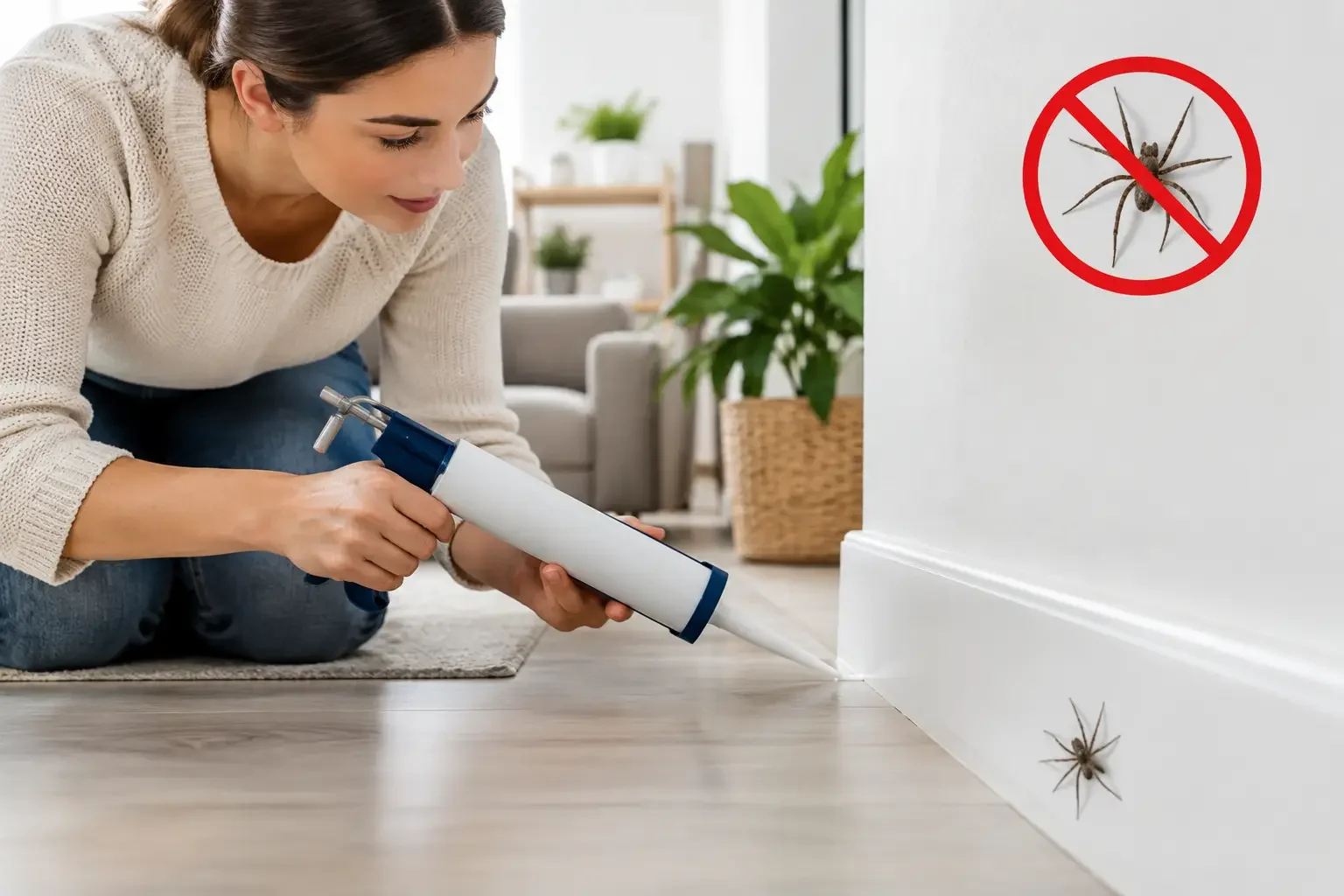
That web in the corner of the garage did not appear because your home is dirty. Spiders usually show up because your property offers two things they need: a quiet place to hide and a reliable food supply. The best ways to prevent spiders focus on removing both, then closing off the easy routes indoors.
For Utah homeowners, spider activity often picks up as temperatures shift. Spiders move toward protected areas around foundations, garages, window frames, sheds, and basements. A few occasional spiders are normal, and most are more interested in insects than people. But repeated webs, egg sacs, or surprise encounters in storage areas are a good reason to make prevention part of your regular home routine.
1. Remove the insects spiders are following
Spiders are predators. If gnats, flies, ants, crickets, and other small insects are gathering around your home, spiders have a stocked pantry. That means the most effective spider prevention is often broader pest prevention.
Keep food crumbs and pet food cleaned up, repair leaky faucets, and make sure trash cans close securely. In the garage, avoid leaving cardboard, birdseed, or open pet-food bags on the floor. Those items can attract insects and rodents, which can create a bigger pest issue than spiders alone.
Outside, standing water and dense vegetation can support insect activity. Clean gutters, avoid overwatering, and manage weeds along fences and foundations. If mosquitoes are a regular problem in your yard, addressing them can also reduce one more food source that draws spiders near the house.
2. Seal the small gaps around the house
A spider can use openings most homeowners would barely notice. Check the areas where pipes, cable lines, and utility wires enter the home. Look closely at door thresholds, torn window screens, dryer vents, foundation cracks, and the weatherstripping around garage doors.
Caulk small gaps and replace damaged screens. Add or refresh door sweeps if you can see daylight under an exterior door. Pay special attention to the door between the garage and the house. Garages are prime spider territory because they are darker, quieter, and usually packed with hiding places.
Sealing is not a one-time project. Utah’s temperature swings can cause materials to expand and contract, so a quick seasonal inspection is worth the effort. It will also help with drafts and other insects.
3. Keep firewood, clutter, and storage away from the foundation
Spiders like protected, undisturbed spaces. Firewood stacks, leaf piles, unused planters, lumber, tarps, and cluttered storage areas give them exactly that. When those hiding spots sit right against the home, spiders have a short walk to your siding, windows, and entry points.
Store firewood off the ground and several feet away from the house when possible. Move outdoor items periodically, especially before bringing them into a garage or basement. Inside, use sealed plastic bins rather than stacks of cardboard boxes for long-term storage.
Cardboard is not automatically a spider magnet, but it creates lots of folds and dark spaces that are rarely disturbed. A tidy garage does not need to look like a showroom. It just needs clear floor space, fewer forgotten piles, and storage you can inspect easily.
4. Vacuum webs, egg sacs, and hiding spots regularly
Vacuuming is one of the simplest ways to prevent a small spider issue from becoming an ongoing annoyance. Focus on ceiling corners, behind furniture, along baseboards, inside closets, around window tracks, and in the garage. A long vacuum attachment makes this quick work.
Remove webs as soon as you see them. A web does not always mean a spider is still present, but leaving it in place gives the next spider a ready-made location. If you spot an egg sac, vacuum it carefully and empty the vacuum outdoors soon afterward.
Do not forget outdoor web zones. Check around porch lights, railings, eaves, deck furniture, window wells, and the edges of sheds. Regular removal makes these areas less inviting without turning your weekend into a full-time pest-control job.
5. Rethink exterior lighting
Porch lights do not attract every type of spider directly. They attract flying insects, and spiders are smart enough to set up near the buffet. Bright lights near doors, windows, and patios can create a steady stream of food for web-building spiders.
Use lights only when needed, or put them on timers or motion sensors. Warm-colored bulbs tend to attract fewer insects than bright cool-white lighting. If security lighting is necessary, consider placing it farther from doors and windows so insects gather away from the home rather than beside an entry point.
This is a trade-off. A well-lit walkway is safer than a dark one, so the goal is not to eliminate outdoor lighting. It is to place and use it more intentionally.
6. Trim plants back from siding and windows
Shrubs, vines, tall grass, and tree branches that touch the house create a bridge for spiders and the insects they hunt. They also hold moisture and shade against the structure, creating comfortable conditions near cracks and crevices.
Keep plants trimmed back from siding, windows, and foundation vents. Clear leaves and debris from around the foundation, particularly in shaded areas. If you use mulch, avoid piling it high against the home. A cleaner border around the foundation makes it easier to spot activity and reduces sheltered habitat.
Healthy landscaping still matters. You do not need to strip your yard bare to discourage spiders. The practical goal is a little breathing room between plants and the house.
7. Be careful when bringing outdoor items inside
Spiders often hitch a ride indoors on patio furniture, potted plants, sports equipment, holiday decorations, and firewood. This is especially common in fall, when families start moving seasonal items from sheds and garages into the house.
Give stored items a quick shake or inspection before bringing them inside. Wear gloves when moving boxes, wood, or equipment that has been sitting undisturbed. If you have children, teach them not to reach into dark storage spaces without looking first. That advice prevents plenty of unpleasant surprises, spider-related or otherwise.
8. Use targeted professional treatment when activity keeps returning
DIY prevention handles many spider issues, but recurring activity calls for a closer look. If you keep finding spiders indoors, see multiple webs around entry points, or are worried about black widow activity in a garage, shed, window well, or woodpile, professional service can save a lot of trial and error.
The right approach should start with an inspection of likely entry points and harborage areas, not a blanket spray of every room. Targeted exterior treatments, web removal, and treatment around foundations, cracks, eaves, and other active zones are often the most useful parts of a prevention plan. Indoor treatment may be appropriate in specific areas, but families with kids and pets understandably want a thoughtful approach.
Safe Chem Pest offers family-safe options, including fully organic indoor applications and low-dose targeted exterior treatments. If a spider problem returns between scheduled services, a guaranteed retreatment should be part of the conversation, not an extra surprise fee.
When a spider sighting needs more attention
Most household spiders are harmless and would rather avoid you. Still, use caution around black widows, which may be found in sheltered outdoor spaces such as garages, sheds, window wells, woodpiles, and under outdoor furniture. Their dark bodies and red or orange hourglass marking are a helpful identifier, though markings can vary.
Avoid handling an unfamiliar spider. Keep children and pets away, wear gloves when working in stored materials, and seek medical attention promptly if a bite causes severe pain, muscle cramping, sweating, nausea, or other concerning symptoms. For recurring sightings around areas your family uses, prevention is much easier than living on edge every time you open the garage.
A home does not need to be perfectly spider-free to feel comfortable. Start with the easy habits: clear webs, reduce clutter, seal gaps, and keep insects from settling in. If spiders keep treating your garage like a long-term rental, it may be time for a local pest professional to help change the terms.