
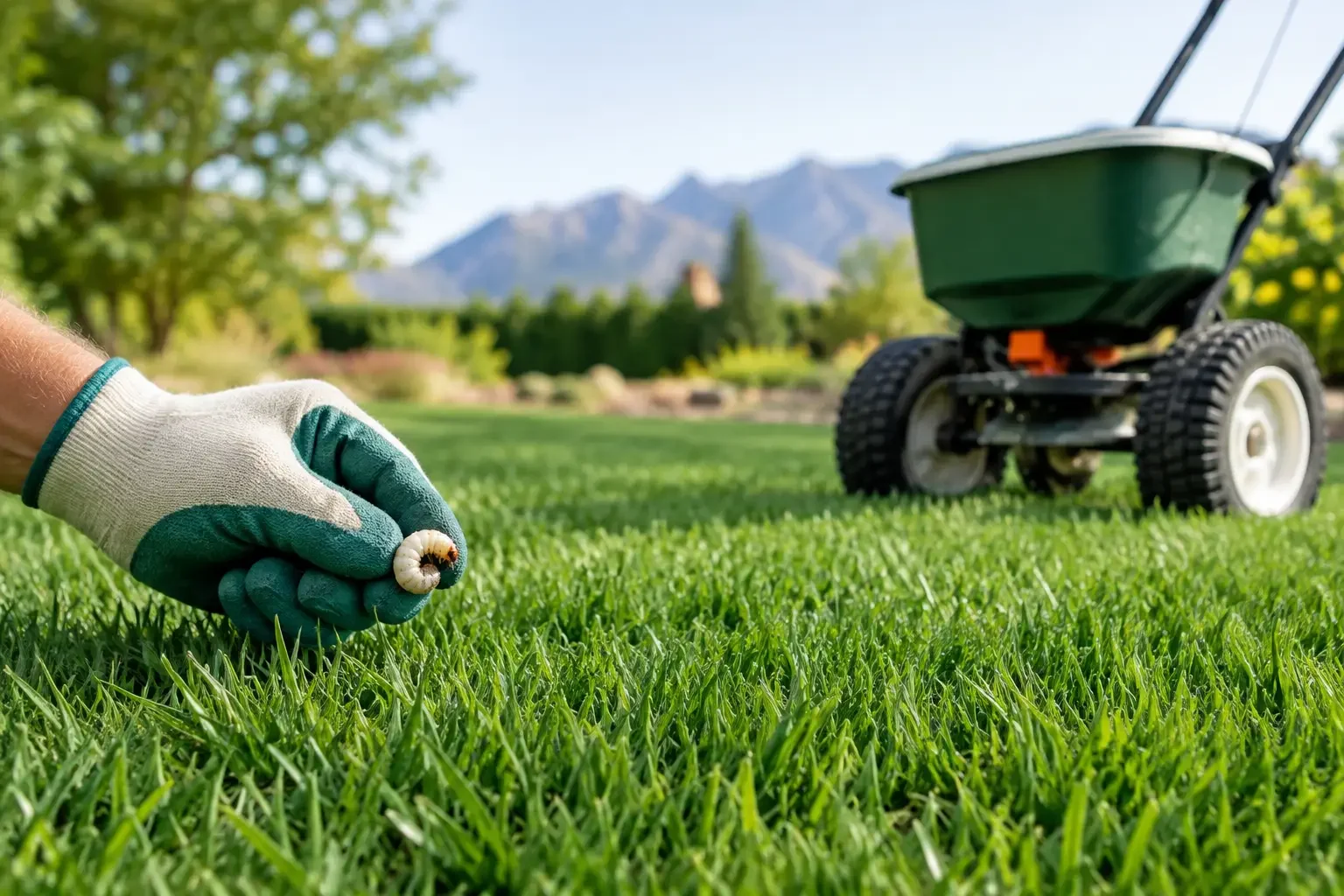
A lawn can look perfectly fine in June and suddenly pull up like loose carpet in August. That is often the calling card of grubs: beetle larvae feeding below the surface on turf roots. Effective grub prevention works before that damage appears, protecting the root system while your lawn still looks healthy.
For Utah homeowners, timing matters more than throwing a product at the lawn after brown patches show up. Grub activity, heat, irrigation habits, and lawn stress all overlap during summer. A simple prevention plan can save a lot of watering, reseeding, and frustration later.
What Grubs Do to a Lawn
Grubs are the white, C-shaped larvae of several beetle species. They live in the soil, where they feed on grass roots. A small number may not cause visible trouble, but a larger population can weaken turf fast, especially when hot weather is already putting pressure on the lawn.
Root damage makes grass less able to take up water. You may notice irregular brown or thinning patches that do not improve after normal watering. In more severe cases, sod lifts easily because there are not enough roots holding it in place.
Grub damage can also attract animals looking for an easy meal. Skunks, raccoons, and birds may dig into turf to feed on the larvae. If you are seeing both loose grass and nighttime digging, the lawn may have more than one problem going on.
Grub Prevention Starts Before You See Damage
The best time to prevent grubs is generally before newly hatched larvae have had time to feed heavily on roots. In many Utah lawns, that means planning treatment during late spring or early summer, with the exact timing depending on the grub species, local weather, and the treatment being used.
This is why a preventive approach is usually more dependable than waiting for visible brown patches. Once large grubs are established in late summer or fall, control can be more difficult. The lawn may also need repair after the grubs are gone.
Preventive lawn treatments are not a one-size-fits-all calendar appointment. A professional should consider the history of the property, the condition of the turf, irrigation coverage, and whether there has been confirmed grub damage in prior years. If your lawn has never had grubs and is otherwise healthy, routine monitoring may be more appropriate than automatically treating every season.
Know the Difference Between Grubs and Lawn Stress
Utah lawns deal with plenty of reasons to turn brown. Heat, uneven sprinkler coverage, compacted soil, drought stress, pet spots, fungal issues, and mowing too short can all create patches that look suspiciously similar to grub damage.
Before assuming grubs are the culprit, pull back a small section of turf near the edge of a damaged area. Healthy turf should have a fairly strong root hold. If it lifts easily, inspect the top few inches of soil for white, curled larvae. Finding an occasional grub does not always justify treatment, but repeated findings across damaged areas are a good reason to act.
A proper inspection prevents the classic lawn-care mistake: treating for insects when the real problem is a sprinkler head watering the sidewalk more faithfully than the grass. It happens.
Build a Lawn That Is Less Vulnerable
A healthy lawn is not immune to grubs, but strong roots can handle minor feeding better than stressed turf. Good maintenance also makes it easier to spot a real pest issue before it gets expensive.
Water Deeply, Not Constantly
Frequent shallow watering encourages shallow roots. Deep, less frequent watering encourages roots to grow farther into the soil, where they are better prepared for summer heat and moderate insect feeding.
The right schedule depends on grass type, soil, weather, and local watering rules. Watch the lawn rather than blindly following a timer. If water runs off quickly, the soil may be compacted or the sprinkler cycle may need to be broken into shorter intervals.
Mow at a Sensible Height
Scalping grass during hot weather puts the root system under extra stress. Keep mower blades sharp and avoid removing more than about one-third of the grass blade at a time. Slightly taller turf generally shades the soil, holds moisture better, and gives the lawn more margin when temperatures climb.
Feed the Lawn Without Overdoing It
Fertilizer can help turf recover and fill in, but too much nitrogen can create fast top growth without solving underlying root problems. A balanced lawn fertilization plan based on the season and the condition of your turf is far more useful than guessing with a heavy application.
Aeration can also help compacted lawns by improving movement of air, water, and nutrients through the soil. It will not eliminate grubs, but it supports stronger roots and better overall turf health.
When a Preventive Treatment Makes Sense
Grub prevention is often worth considering when a property has had confirmed grub damage before, neighboring lawns have recurring issues, or wildlife has repeatedly torn up turf while feeding. It can also be a practical choice for lawns that are difficult or costly to repair, such as highly visible front yards, rental properties, or commercial landscapes.
The trade-off is straightforward: prevention means treating before you know for certain that a damaging grub population will develop. For homeowners with no history of grub activity, regular inspection and good lawn care may be the better first step. For lawns with a track record of damage, a properly timed preventive service is often the less stressful option.
If treatment is needed, follow product label directions exactly or work with a licensed lawn care professional. Application timing, watering requirements, and lawn conditions affect whether a treatment reaches the soil zone where grubs live. More product is not better, and treating at the wrong time can waste both money and effort.
Avoid Quick Fixes That Create Bigger Problems
When brown spots appear, it is tempting to water every day, fertilize heavily, and apply multiple treatments at once. That can make diagnosis harder and may stress the lawn further.
Instead, inspect the turf first. Check irrigation coverage, look for grubs in the soil, and consider whether the grass is receiving enough water without staying constantly soggy. If digging animals are involved, address the food source rather than treating the surface damage alone.
Also be cautious with broad, repeated insecticide applications. The goal is targeted control when there is a reason for it, not turning the yard into a chemistry experiment. A knowledgeable provider can help identify the issue and recommend an approach that fits the lawn, the season, and your family's preferences.
A Practical Plan for Utah Homeowners
Start by watching your lawn through late spring and summer. Note areas that dry out first, sections with weak root hold, and any animal digging. If your property has had a grub issue before, schedule an inspection early enough to discuss preventive timing rather than waiting for turf to fail.
For homeowners in Weber, Davis, and Salt Lake counties, Safe Chem Pest can pair targeted lawn care with pest, mosquito, or tree services when that makes sense for the property. Bundling services may reduce cost, but the bigger benefit is having one local team look at the conditions affecting your whole outdoor space.
A green lawn is not just about watering more. It is about protecting the roots that keep the grass anchored, hydrated, and able to bounce back when Utah summer gets serious. Catch grubs early, care for the turf consistently, and you will spend more weekends enjoying the yard instead of repairing it.