
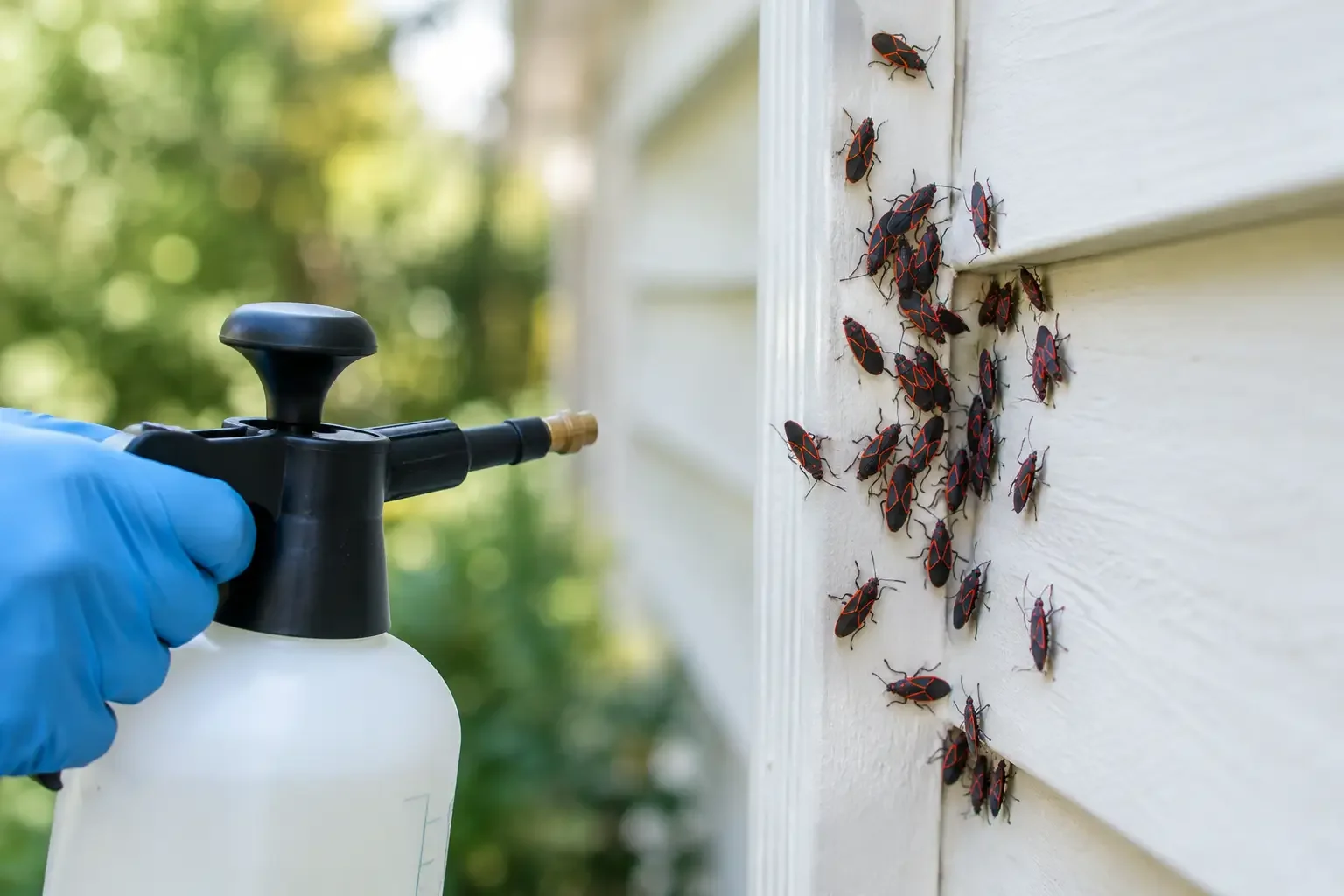
Boxelder bugs have a talent for showing up where you can see them most: clustered on a sunny exterior wall, crawling around windows, or slipping into the house just as cooler weather arrives. The good news is that learning how to control boxelder bugs usually does not require treating your whole home like a crime scene. The best approach is a mix of keeping them out, removing the ones you see, and treating exterior gathering areas before they become indoor guests.
These black-and-red bugs are more annoying than dangerous. They do not damage the structure of your home, spread disease, or bite people in the usual sense. Still, a few hundred bugs sunning themselves on your siding can make a front porch feel a little less welcoming.
Why Boxelder Bugs Crowd Around Utah Homes
Boxelder bugs spend the warm months outside, feeding primarily on the seeds and foliage of boxelder trees. They can also be found around maple and ash trees. When fall temperatures start to drop, adults look for protected places to spend the winter. South- and west-facing walls are especially attractive because they hold heat through the day.
The bugs do not reproduce inside your house. They are simply looking for tiny gaps that lead to a protected void in a wall, attic, window frame, or basement. On a warm winter or early spring day, they may wake up and wander indoors by mistake.
That behavior explains why a single indoor spray rarely solves the problem. If boxelder bugs are already tucked behind siding or inside wall gaps, the long-term fix is stopping the next wave before it finds an entrance.
How to Control Boxelder Bugs Before They Get Inside
Timing matters with boxelder bugs. Exterior prevention is most effective in late summer through early fall, before large groups settle into cracks around the home. In Utah, that often means paying attention as nights begin cooling down, even while afternoons still feel warm.
Seal the small gaps that do the heavy lifting
Boxelder bugs can fit through surprisingly small openings. Walk around the outside of your home and look closely at window frames, doors, utility lines, siding edges, vents, and foundation cracks. Repair damaged weatherstripping, replace torn window screens, and use appropriate sealant around gaps where pipes or cables enter the house.
Pay special attention to the sunny sides of the home. If bugs consistently gather along one wall, that area deserves a closer inspection. A door sweep can make a bigger difference than homeowners expect, especially for bugs that gather near patios, garages, and walkout basements.
Do not seal active weep holes or block necessary ventilation. Those openings help manage moisture in the structure. If you are unsure whether a gap should be closed, it is better to ask a pest professional than create a moisture issue while trying to solve a bug issue.
Clean up outdoor gathering spots
Boxelder bugs are drawn to warm, protected surfaces, so clutter near the home gives them more places to hide. Keep leaf piles, stacked boards, unused pots, and dense debris away from the foundation when possible. This will not eliminate every boxelder bug in the neighborhood, but it makes the area around your home less convenient for them.
Trim branches that touch the roof or exterior walls. While boxelder bugs do not need a branch highway to reach a house, reducing contact points makes general pest prevention easier and helps you spot activity around the exterior.
Consider the trees, but do not rush to remove them
A female boxelder tree can support a large local population because its seed pods are a preferred food source. Removing a problem tree may reduce bug pressure over time, but it is a big decision with real trade-offs. A mature tree provides shade, appearance, and value to a property, and boxelder bugs can still come from nearby trees.
If a tree is unhealthy, poorly placed, or dropping a heavy seed load near your home, tree care or removal may make sense. If it is healthy and valuable, focus first on exclusion and seasonal exterior treatment. In most cases, removing a tree is not the first or only answer.
What to Do When Boxelder Bugs Are Already Indoors
Once boxelder bugs have entered, the simplest solution is usually a vacuum. Use a hose attachment to collect them from windowsills, curtains, and corners, then empty the vacuum contents into a sealed bag and place it in an outdoor trash bin. A stocking placed inside the vacuum hose can make disposal easier if you are dealing with a small number.
Avoid crushing them against walls, carpeting, or light-colored fabrics. Their bodies can leave reddish-orange stains, and nobody needs a bug problem turning into a cleaning project.
For a small number of bugs on hard surfaces, a spray bottle filled with soapy water can help immobilize them. Use it carefully, wipe up the bugs afterward, and test any solution in an inconspicuous spot before spraying near finished surfaces. Soap-and-water methods are useful for visible bugs, but they do not prevent more bugs from emerging from hidden wall spaces.
Skip foggers and broad indoor insecticide applications. They are usually excessive for boxelder bugs and may leave residues where your family and pets spend time. A targeted approach is safer, cleaner, and more likely to address the actual source of the issue.
When Exterior Treatment Makes Sense
If boxelder bugs return in large numbers every fall, targeted exterior treatment can be a practical part of the plan. The goal is not to drench the property. It is to treat the areas where bugs gather and the likely entry points around the structure, such as foundation edges, window and door frames, siding seams, and utility penetrations.
A properly timed exterior treatment helps reduce the number of bugs attempting to overwinter in your home. It works best alongside sealing and cleanup. Treatment without exclusion can reduce the crowd on the wall, but bugs may still find the same easy openings next season.
The right product and application method depend on the home, the severity of activity, and who lives there. Families with children, pets, or sensitive indoor spaces often prefer a plan that limits applications to targeted exterior areas and uses low-dose products where they are needed. That is a sensible approach, not a compromise.
For heavy activity, recurring problems, or bugs appearing from multiple rooms, a professional inspection can identify the pressure points. Safe Chem Pest can help homeowners in northern Utah address seasonal boxelder bug activity with practical exterior-focused service, straightforward recommendations, and no pressure to sign up for something they do not need.
Common Mistakes That Keep the Problem Going
The biggest mistake is waiting until bugs are already inside to think about prevention. By then, some may be sheltered in wall voids and difficult to reach. A better plan is to watch for the first clusters outdoors in late summer or fall and act before they settle in.
Another common mistake is relying on tree removal alone. Removing one boxelder tree may help, but bugs travel and neighboring properties can still supply plenty of them. It is more reliable to make your home harder to enter.
Finally, do not confuse a visible cluster with a dangerous infestation. Boxelder bugs can look dramatic because they gather in groups, but they are mainly a nuisance pest. Calm, targeted prevention beats panic spraying every time.
A quiet exterior wall in the fall is not always possible, especially near mature boxelder or maple trees. But with a few repairs, regular cleanup, and timely treatment when needed, you can keep those red-and-black sunbathers where they belong: outside.