
Is Tree Injection Pest Control Worth It?
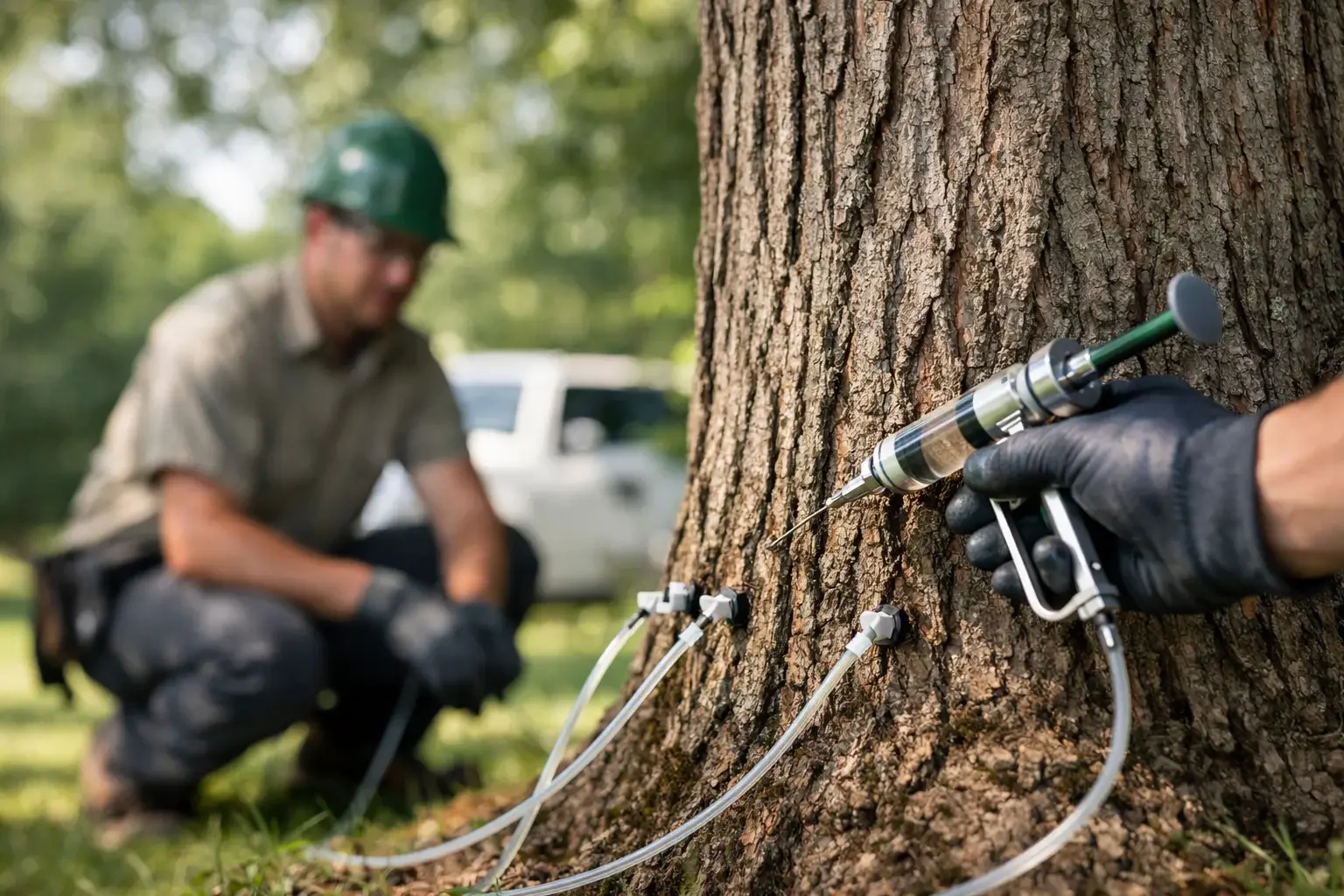
That maple in the front yard usually does not complain until it really means it. By the time you notice thinning leaves, bark damage, or odd little holes in the trunk, the pest problem may already be well underway. That is where tree injection pest control comes in. It is a targeted treatment method that places product directly into a tree’s vascular system so the tree can move it where it is needed.
For homeowners, this matters because not every tree problem should be blasted with a broad spray and not every insect issue can wait until next season. If you have kids, pets, neighbors close by, or simply do not love the idea of pesticide drifting across your yard, injection can be a smart option. But it is not magic, and it is not the right answer for every pest or every tree.
What tree injection pest control actually does
Tree injection pest control is exactly what it sounds like. A trained technician places a measured treatment into the trunk of the tree, usually through small injection ports. Once inside, the material moves through the tree’s internal transport system and helps protect the canopy, trunk, or both depending on the pest and the product used.
The main advantage is precision. Instead of coating the outside of the tree and hoping enough product reaches the insect, the treatment is delivered from the inside. That can reduce off-target exposure and often works well when the pest feeds on internal plant tissues, leaves, or sap.
It is especially useful when the tree is too large for practical foliar spraying, when wind makes spray drift a concern, or when the treatment area is close to patios, play areas, vegetable gardens, or neighboring properties. In a lot of suburban Utah neighborhoods, that is not a small detail. Trees are often planted close to homes, fences, and sidewalks, so targeted treatment is a real benefit, not just a nice marketing phrase.
When tree injection pest control makes sense
Injection tends to make the most sense when the pest is feeding in a way that allows the tree to carry the treatment to it. Sap-feeding insects, some boring insects, and certain canopy pests can be good candidates. The exact fit depends on the species, the tree, the time of year, and how advanced the infestation is.
Homeowners often assume any tree insect problem can be handled the same way. Not quite. Aphids on one tree may respond differently than borers in another. Some pests are best managed preventively, before obvious damage shows up. Others need a combination approach that may include pruning, soil care, or external treatment along with injection.
This is also why a free inspection matters. A thinning canopy can be caused by insects, disease, drought stress, root damage, or plain old bad luck with weather. If you treat the wrong problem, you have just spent money giving your tree a very expensive shrug.
Common scenarios where injection helps
A mature shade tree with a high canopy is a good example. If the infestation is mostly in the upper portion of the tree, spraying every inch of foliage may be impractical or wasteful. Injection can let the tree distribute treatment upward without soaking the whole yard.
Another common case is when homeowners want a more contained application. If your dog treats the backyard like a racetrack or your kids are outside every afternoon, the idea of a targeted treatment inside the tree is easier to feel good about than broad external coverage.
It can also be a strong fit for valuable ornamentals or established landscape trees that would be expensive to lose and difficult to replace. A healthy mature tree adds shade, curb appeal, and real property value. Replacing it is rarely cheap.
Where injection has limits
This is the part some companies glide past. Tree injection is useful, but it is not a fix for everything.
First, timing matters. Trees need to be actively moving water and nutrients for injection products to distribute effectively. If the tree is under severe drought stress, heavily damaged, or entering dormancy, results may be slower or weaker. That does not always mean injection is off the table, but expectations should be realistic.
Second, not all pests are equally vulnerable to injected treatments. Surface-feeding pests, pests hidden in areas with poor product movement, or issues driven mostly by disease rather than insects may need another method. Sometimes a spray, soil treatment, cultural correction, or a full tree health plan makes more sense.
Third, stressed trees need more than pest treatment. If a tree is struggling because of compacted soil, poor watering, nutrient imbalance, or previous injury, killing the insects may only solve part of the problem. The pest may be the loudest symptom, not the root cause.
Is injection hard on the tree?
A fair question. Injection does create small entry points in the trunk. When done correctly, those ports are limited and strategically placed. On a healthy tree, that impact is usually minor compared with the benefit of controlling a serious pest problem.
The bigger concern is repeated poor technique or unnecessary treatment. That is why experience matters. This is not a job for guesswork, a random bottle from the internet, and a Saturday afternoon confidence boost.
How tree injection compares to spraying
Spraying gets more attention because it is familiar. You see the truck, hear the equipment, and watch the tree get treated. Injection is quieter and more behind the scenes, but that does not make it weaker.
The biggest difference is exposure. Sprays put product on the exterior of the tree and surrounding environment. Injection keeps the treatment largely inside the tree itself. For many homeowners, especially those who prioritize family-safe and pet-friendly options, that narrower placement is a real advantage.
That said, sprays can still be the better tool in some situations. If a pest is on the surface of leaves or bark, or if immediate contact knockdown is needed, spraying may be faster and more appropriate. Injection often works as a systemic treatment, which means it may take time to move through the tree and affect feeding pests.
So the honest answer is not injection versus spraying forever. It is which method fits this tree, this pest, and this moment.
What homeowners should ask before treating a tree
If you are considering tree treatment, ask simple questions and expect straight answers. What pest are we treating? Is the tree healthy enough for injection? Is this preventive or corrective? How long will it take to work? Will one treatment do it, or is ongoing protection recommended?
You should also ask whether the problem is definitely insects. A good company will not force every tree issue into a pest control box just because that is what they sell. Sometimes the best recommendation is a broader care plan that includes fertilization, watering adjustments, or monitoring through the season.
This is one reason local service matters. In Utah, tree stress often comes from a mix of insects, heat, irrigation issues, and tough soil conditions. A technician who works in Weber, Davis, and Salt Lake County neighborhoods every day has a better sense of what tends to show up, when it shows up, and what actually works here.
Why a broader yard plan often works better
One tree treatment can solve one tree problem. Sometimes that is enough. But many homeowners are dealing with more than that at the same time - mosquitoes in the backyard, ants around the foundation, lawn issues, and trees showing stress after a hot stretch.
That is where bundling services can save money and hassle. If you already need pest control, mosquito service, lawn care, or tree protection, combining them usually creates a cleaner plan and better pricing than piecing together separate visits. For plenty of households, one company handling those outdoor services just makes life easier.
If you are comparing providers, pay attention to how easy they make the process. Clear pricing, no contracts, no cancellation fees, and guaranteed retreatments are not flashy, but they matter. A simple service experience is underrated until you have dealt with the opposite.
Safe Chem Pest takes that straightforward approach because most homeowners are not shopping for a lecture. They want to know what is wrong, what fixes it, what it costs, and whether the treatment is a sensible fit for a family home.
So, is tree injection pest control worth it?
Often, yes - when the pest, timing, and tree condition line up. It can be a precise, lower-exposure way to protect valuable trees without broad exterior spraying. For large shade trees, tight residential spaces, and homeowners who want a targeted option, it is often one of the smartest tools available.
But worth it does not mean automatic. The right answer depends on what is attacking the tree, how far the damage has progressed, and whether the tree has enough overall health to respond well. A good inspection should make that clear without the sales pitch.
If a tree on your property looks off, do not wait for it to become obvious from the street. Trees usually give small warnings before they give expensive ones.