
Grub Prevention for Lawns That Works
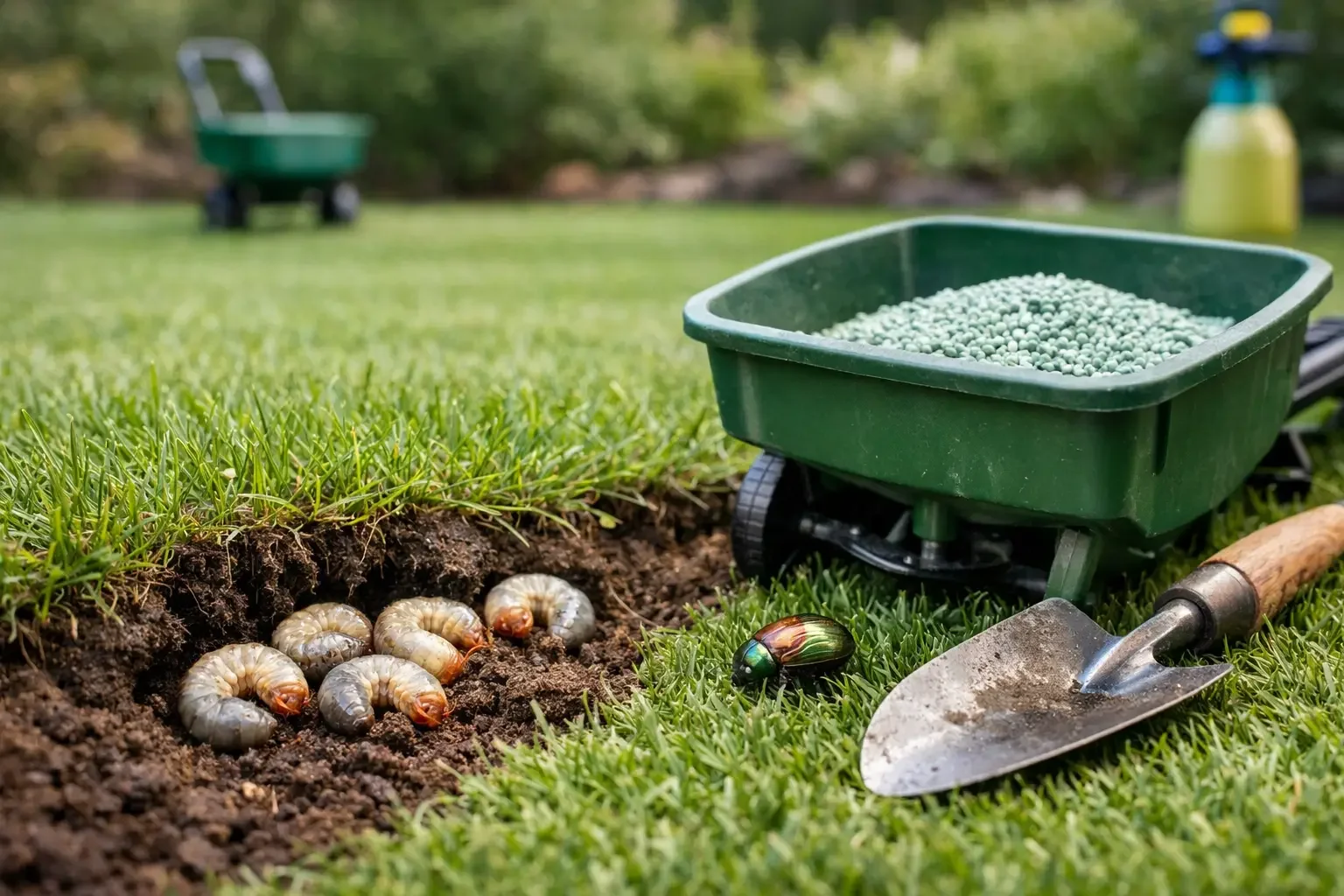
If your lawn suddenly peels back like loose carpet, grubs are usually the reason. Grub prevention for lawns matters because by the time you see brown patches in late summer or fall, the damage is often already done and the roots underneath may be mostly gone.
That is the frustrating part with grubs. They work below the surface, quietly feeding on grass roots while your lawn looks mostly fine from above. Then heat, drought stress, or hungry birds show up, and all that hidden damage becomes obvious at once. A lot of homeowners assume they need fertilizer or more water. Sometimes the real issue is a grub population that got a head start weeks earlier.
What grubs actually do to a lawn
Grubs are the larval stage of certain beetles, including Japanese beetles, June beetles, and masked chafers. The adults lay eggs in the soil, the eggs hatch, and the young larvae feed on grassroots. That feeding weakens the lawn's ability to take up water and nutrients, which is why grub damage often looks worse during hot, dry stretches.
A healthy lawn can tolerate a small number of grubs. Not every lawn with a few larvae needs treatment. That is where people sometimes overspend or treat at the wrong time. The goal is not to panic over one beetle or one random brown spot. The goal is to prevent a population large enough to thin the turf, attract skunks and raccoons, and leave you with dead sections to repair.
Grub prevention for lawns starts with timing
If there is one thing that matters most, it is timing. Preventive grub control works best when products are applied before young grubs get large and start feeding heavily. In most Utah lawns, that usually means watching the early to mid-summer window, not waiting until fall when damage is obvious.
This is where lawn care gets a little less satisfying than people want. You do not always treat grubs when you see grubs. Preventive products are aimed at the eggs and newly hatched larvae, so the right application window is earlier than most homeowners expect. Curative products can help later, but they tend to be more limited, more stressful on the lawn, and more dependent on catching the problem at just the right stage.
If you miss the prevention window, it does not automatically mean your lawn is doomed. It just means the strategy may shift from prevention to damage control and recovery. That usually costs more time, more water, and sometimes more reseeding.
How to tell if you have grubs or something else
Brown patches do not always mean grubs. Utah lawns deal with heat stress, uneven irrigation, compacted soil, fungal problems, pet spots, and plain old neglected sprinklers. Grub damage tends to have a few clues that set it apart.
First, the grass may feel spongy underfoot. Second, the turf can lift easily because the roots have been chewed off. Third, you may notice birds, raccoons, or skunks tearing at the lawn for a free meal. Those animals are often the second wave of damage. The grubs hurt the roots, and the wildlife turns the yard into a breakfast buffet.
If you want to check, cut a square foot of turf a few inches deep and peel it back. If you find several white, C-shaped larvae in that section, you likely have a real grub issue. If you find none, the lawn problem may be something else entirely. That matters because the fix for grubs is different from the fix for drought stress or disease.
Why some lawns get hit harder than others
Grubs are not completely random. Beetles prefer certain conditions when laying eggs, and stressed lawns are less able to recover from root feeding. Lawns that stay consistently moist during egg-laying season can be more attractive. Thick thatch can also create a friendlier environment. At the same time, thin or underfed turf tends to show damage faster because it has less root strength to begin with.
That is one reason grub control is not just about insect treatment. Good lawn care helps, too. A lawn with proper fertilization, steady irrigation, and healthier root growth has a better chance of tolerating minor feeding without turning brown overnight. Prevention works better when the grass is not already struggling.
The best prevention plan is simple, not complicated
For most homeowners, the most effective plan is a combination of monitoring, seasonal timing, and a preventive treatment if your lawn has a history of grub damage or your neighborhood tends to get repeat issues. You do not need a chemistry degree and a clipboard. You just need a plan that happens before the lawn starts falling apart.
A typical prevention approach looks like this: keep the lawn healthy in spring, watch for beetle activity as summer approaches, apply a preventive grub treatment during the proper window, and water it in according to label directions so it reaches the root zone. That watering step matters more than people think. If the product stays near the surface, it cannot do much good where the grubs are feeding.
There is also an it-depends factor here. If your lawn has never had grub damage, a preventive treatment every single year may not be necessary. If you have had repeat damage, or if nearby properties deal with grubs regularly, prevention is often cheaper and easier than repair.
Preventive treatment vs curative treatment
This is where homeowners get understandably confused. Preventive treatments are designed to stop the problem before it gets going. Curative treatments target active infestations after grubs are present and feeding.
Preventive options usually offer better control with less lawn damage, but they must be applied on schedule. Curative options can still help, especially if the infestation is caught early, but larger grubs are harder to control and the lawn may need extra recovery work afterward. That means more watering, possible fertilization adjustments, and sometimes patching damaged areas.
If your lawn already pulls up easily in chunks, it is probably too late to think only in prevention terms. At that point, you are likely dealing with treatment plus repair. That is why a lot of homeowners prefer to stay ahead of the cycle rather than gamble on late-season rescue.
Watering and mowing can help more than you think
Grub prevention for lawns is not only about product choice. Lawn habits play a real role. Deep, consistent watering helps build stronger roots, while shallow daily watering can create weaker turf that struggles faster under stress. You also want to avoid mowing too short. Scalped grass has less energy in reserve and fewer resources to recover from root loss.
That does not mean perfect mowing and irrigation will stop every grub issue. Beetles do not exactly ask permission first. But solid lawn care gives you a better margin for error, and it makes the difference between a lawn that bounces back and one that needs a full rehab.
When professional help makes sense
Some lawn problems are easy to spot. Grubs are not always one of them. If you are not sure whether you are dealing with insects, irrigation trouble, or general turf stress, getting a clear diagnosis can save you from wasting money on the wrong fix.
Professional lawn care also helps with timing. Missing the treatment window by a few weeks can be the difference between straightforward prevention and a much messier repair job later. For homeowners managing busy schedules, kids, pets, and a yard that already needs mowing every five minutes in summer, that convenience alone can be worth it.
If you are already paying for lawn fertilization, weed control, tree care, or pest service, bundling services can also make the numbers work better. Safe Chem Pest, for example, offers bundle discounts that can reduce the overall cost if you are already trying to protect more than one part of your property. That is not just good marketing. It is practical when the same lawn that needs grub prevention also needs feeding, weed control, and maybe a tree treatment while you are at it.
What Utah homeowners should keep in mind
In northern Utah, lawns often deal with dry heat, irrigation inconsistency, and compacted soils, which can make grub damage show up fast once roots are compromised. A lawn may look decent in early summer, then crash in a hurry when hotter weather hits. That is one reason prevention matters so much in Weber, Davis, and Salt Lake County neighborhoods where curb appeal and usable outdoor space both matter.
The other thing to remember is that not every brown patch needs insecticide. Sometimes the smartest move is a quick inspection, not a panic purchase. Honest lawn care should save you from unnecessary treatments just as much as it saves you from unnecessary damage.
A better way to think about grub control
The best approach is not to wait for your lawn to send up a distress flare. Think of grub control the same way you think about changing furnace filters or servicing sprinklers. It is routine prevention that protects something more expensive.
A good lawn does not happen by accident, and neither does a lawn that survives grub season without drama. Catch the timing, keep the turf healthy, and if your yard has a history of problems, deal with it before the grass starts peeling up in your hands. Your lawn should be for barefoot kids, backyard barbecues, and maybe a dog doing zoomies - not for feeding a hidden army under the soil.