
Free Soil Test Lawn Care That Actually Helps
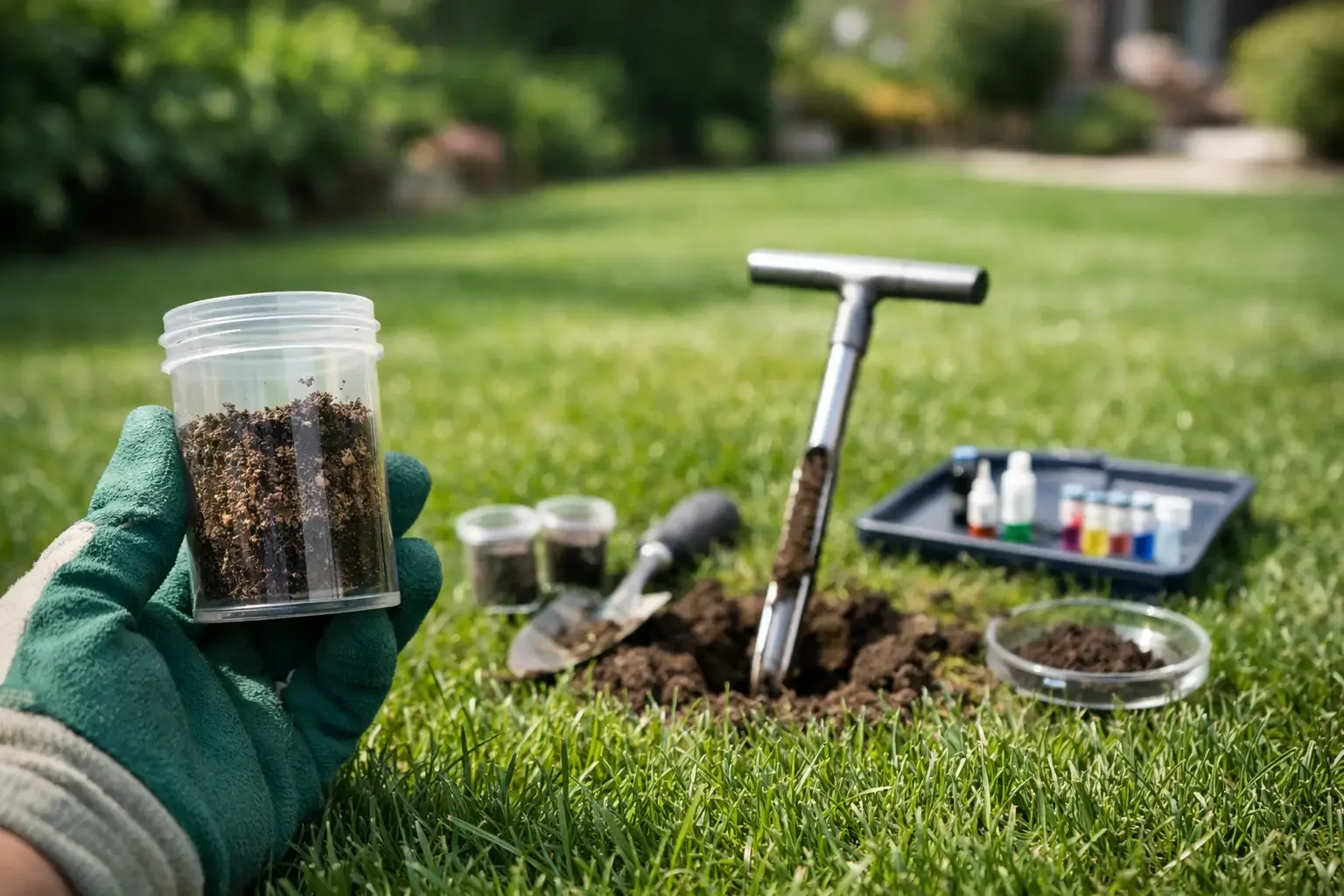
Brown patches in July, weeds in spring, and a fertilizer bag in the garage that promised miracles - that is how a lot of lawn problems start. Free soil test lawn care sounds like the smart fix, and sometimes it is. But the real value is not the word free. It is whether the test gives you information you can actually use to grow thicker, healthier grass without wasting time or money.
For Utah homeowners, that matters more than ever. Our soils can be alkaline, irrigation water can add its own complications, and weather swings do not exactly make lawn care easy. If your grass is struggling, a soil test can keep you from guessing. It can also keep you from throwing down products your lawn never needed in the first place.
What free soil test lawn care can tell you
A good soil test gives you a snapshot of what is happening below the surface. Most people look at grass color and density, but roots live in the soil, and that is where many lawn problems begin.
A basic test usually checks pH and nutrient levels such as phosphorus and potassium. Some tests also report organic matter, salinity, or micronutrients. That matters because a lawn can look thin for very different reasons. One yard may need nitrogen management and better watering habits. Another may have compacted soil, high pH, or excess salts that make it harder for roots to use the nutrients already present.
This is where testing earns its keep. It helps answer a simple question homeowners ask all the time: what does my lawn actually need? Not what the bag says. Not what your neighbor swears by. What your lawn needs.
Where a free lawn soil test helps most
Free is great when the test is done well and the results are explained clearly. If you have never tested your soil before, a free lawn soil test can be a smart starting point. It is especially useful when you are seeing recurring issues like slow green-up, poor growth in certain areas, or weeds taking over despite regular watering and mowing.
It can also help before you spend money on a fertilizer program. Many homeowners assume more fertilizer equals better grass. That is a good way to waste money and occasionally make the problem worse. Too much of the wrong nutrient can stress turf, encourage certain weeds, or create unnecessary runoff.
A free test is also useful if you just moved into a home and have no clue what the previous owner did to the yard. Some lawns have been overwatered for years. Some have had random treatments tossed on whenever a sale popped up at the hardware store. Testing gives you a baseline instead of a mystery.
What a free soil test may not tell you
This is the part people skip, and it matters. Soil testing is helpful, but it is not magic.
A lab result does not always explain every lawn issue. If your grass is thinning because of grub damage, disease, mower stress, shade, poor irrigation coverage, or compaction, the soil numbers alone will not solve it. A test can tell you the chemistry. It cannot fully diagnose how the lawn is being used, watered, cut, or stressed.
Free tests also vary in quality. Some are genuinely useful. Others are basically a sales tool with a recommendation that every lawn needs the same treatment package. If the results are vague or the answer is always buy more product, that is a clue to slow down.
The best approach is to treat a free soil test as one piece of the puzzle. Helpful piece? Absolutely. Whole puzzle? Not quite.
How to use free soil test lawn care results the right way
Once you have results, the next step is where a lot of homeowners get stuck. Numbers on a sheet do not help much unless they turn into a plan.
Start with pH. In many Utah lawns, pH runs high, which can affect how grass uses nutrients. Even if nutrients are technically present, they may not be readily available to the turf. That is why a lawn can still struggle after feeding. The problem is not always a lack of fertilizer. Sometimes it is poor nutrient uptake.
Next, look at the major nutrients. If phosphorus or potassium is already sufficient, adding more may not do much for the lawn. Nitrogen is a little different because it changes more quickly and often drives color and growth, but nitrogen decisions should still match the season, grass type, and watering habits.
Then step back and compare the results with what the lawn looks like in real life. If the test says nutrients are decent but the turf is still weak, the issue may be compaction, irrigation timing, mowing height, insect pressure, or a mix of several things. Lawn care is annoyingly honest that way. Sometimes the dirt is not lying, but it is not telling the whole story either.
Why testing beats guessing on fertilizer
Fertilizer gets marketed like a shortcut. Spread this. Water it in. Stand back and admire your lawn. Real lawns are a little less dramatic.
Testing helps you avoid two common mistakes. The first is underfeeding a lawn that actually needs support. The second is overfeeding a lawn that already has enough of certain nutrients. Both mistakes cost money. One gives you poor results, and the other can create extra growth, stress, or imbalance.
When you know what the soil is doing, you can make smarter decisions about timing and product choice. That usually means better turf with less waste. For homeowners who care about family-safe, sensible treatments, that is a big deal. There is no prize for applying more product than necessary.
Free soil test lawn care and Utah conditions
If you live along the Wasatch Front, local conditions make soil testing more useful than it might be in milder regions. Alkaline soils are common. Hard water can contribute minerals and salts. Summer heat can stress cool-season grasses fast, especially when irrigation is uneven.
That means lawn issues often overlap. A yard may have nutrient limitations, heat stress, and watering problems all at once. A test helps narrow the field. It will not replace a trained eye, but it can keep you from making the classic move of blaming everything on fertilizer.
For homeowners in Weber, Davis, and Salt Lake counties, that local context matters. Two lawns can look equally tired in August for completely different reasons. One may need a feeding adjustment. The other may need better irrigation coverage and less foot traffic. Same symptom, different fix.
When professional lawn care makes more sense
If you enjoy lawn projects, a free test can give you a useful starting point. But if you want the lawn to look better without turning your garage into a chemistry lab, professional help can save a lot of trial and error.
A solid lawn care program does more than react to a test result. It looks at seasonality, weed pressure, turf type, watering patterns, and whether the property needs fertilization, weed control, or broader care for trees and shrubs nearby. That bigger view matters because lawns do not live in isolation. Stress in one part of the landscape often shows up somewhere else.
This is also where consistency helps. Good lawns usually come from steady, well-timed service, not panic treatments after the yard already looks rough. If you are already managing pest issues, mosquitoes, trees, or lawn weeds, bundling services can simplify things and cut costs. Safe Chem Pest keeps that part straightforward with bundle discounts and no-contract pressure, which is refreshing if you have dealt with companies that make simple yard care feel like a timeshare presentation.
How to spot a useful test from a useless one
A useful soil test gives clear results, explains what they mean, and connects those findings to practical next steps. It should help answer whether your lawn needs a nutrient adjustment, a pH strategy, or a closer look at non-soil issues.
A useless test is usually heavy on sales and light on explanation. If every lawn somehow needs the exact same treatment package, that is not insight. That is a brochure with dirt on it.
Ask simple questions. What was tested? What do the numbers mean? What should change first? If the answers are clear and grounded in your lawn conditions, good. If not, keep your wallet in your pocket for a minute.
Free soil test lawn care can absolutely be worth it. It just works best when free is the starting point, not the whole strategy. The real win is getting a lawn plan that matches your soil, your yard, and your actual goals - whether that means greener grass, fewer weeds, or just making it through summer without feeling like your sprinkler system runs your life.