
Organic Sprays Versus Conventional Pesticides
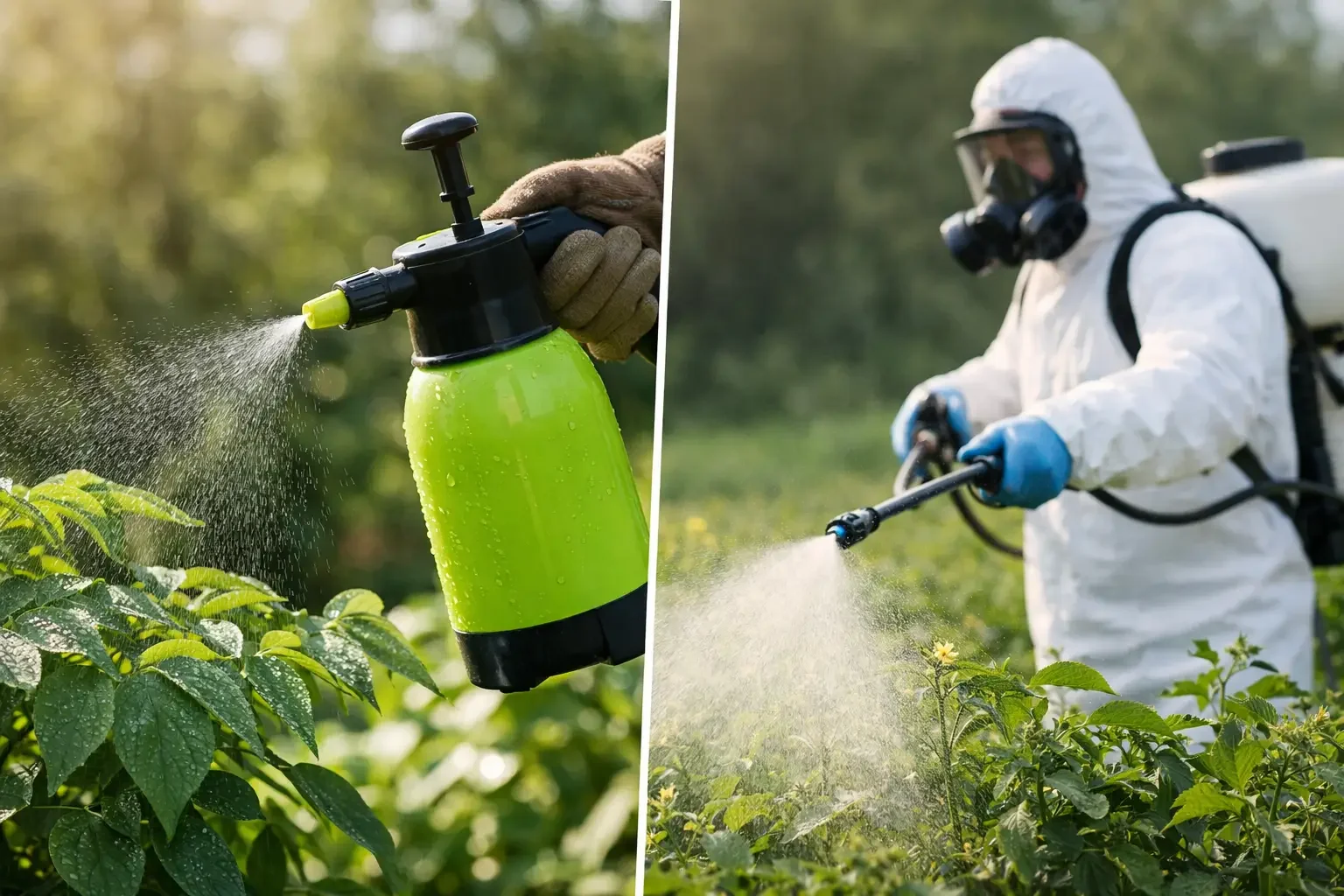
If you have kids playing on the floor, a dog that licks everything, or a backyard that turns into mosquito headquarters every summer, the question gets real fast: organic sprays versus conventional pesticides - which one actually makes more sense for your home?
The honest answer is not as catchy as a billboard. It depends on the pest, where the treatment is going, how quickly you need results, and how much residual protection you want after the initial service. Homeowners are often told they need to pick a side, as if one option is always smart and the other is always reckless. That is usually marketing, not reality.
For most homes, the best plan is not about being extreme. It is about using the right treatment in the right place, in the right amount, for the right reason.
What people usually mean by organic sprays versus conventional pesticides
When people say organic sprays, they are usually talking about products made from naturally derived ingredients such as essential oils, plant-based compounds, soaps, or minerals. These products are often chosen for indoor use or for customers who want a lower-impact approach around children and pets.
Conventional pesticides are typically synthetic formulations designed to target specific pests with a stronger residual effect. That means they often keep working longer after the treatment dries or settles, especially on exterior surfaces where bugs are constantly trying to come back.
This is where confusion starts. Organic does not automatically mean harmless, and conventional does not automatically mean dangerous. Plenty of natural substances can irritate skin, trigger allergies, or lose effectiveness quickly. Plenty of conventional products, when applied correctly and in low targeted amounts, are designed to be used safely in residential settings.
The better question is not which category sounds nicer. The better question is what problem you are trying to solve.
Speed, staying power, and why the trade-off matters
If you are battling a sudden ant trail through the kitchen or spiders setting up camp around the garage, speed matters. Conventional products often have an advantage here because they can deliver faster knockdown and longer residual control, especially on exterior barrier treatments.
Organic sprays can still work well, but they often require more direct contact or more frequent reapplication. That is not a flaw so much as a limitation of the chemistry. Some break down faster in sunlight, heat, or rain. In Utah, where summers can be hot and dry, that shorter lifespan can matter.
For indoor applications, many homeowners are comfortable with organic options because the goal is often targeted treatment in lower-exposure areas rather than months of residual control. Outdoors, however, pests do not take weekends off. A product that fades quickly may mean more follow-up visits or less consistent protection.
So if your top priority is strong, longer-lasting perimeter control, conventional treatments often win. If your top priority is minimizing what is used indoors and you are okay with a more tailored strategy, organic options can be a very good fit.
Safety is about application, not just labels
This is probably the biggest point homeowners deserve to hear clearly. Safety is not determined by whether the label says natural or synthetic. Safety comes from how a product is selected, where it is applied, how much is used, and whether the treatment matches the environment.
A low-dose exterior application placed exactly where pests travel is very different from broad overapplication. A carefully chosen indoor organic treatment can make sense in living spaces where families want a lighter-touch option. Both approaches can be responsible. Both can also be misused if the technician is sloppy, rushed, or trying to impress you with how much product they can spray around.
That is why a practical pest plan usually beats a one-size-fits-all promise. You want someone looking at pressure points, entry areas, harborage zones, moisture issues, and seasonality - not someone just picking a buzzword.
Where organic sprays make the most sense
Organic sprays are often a strong fit indoors, especially when the issue is limited, localized, or part of a broader prevention plan. If the pest pressure is moderate and the goal is to reduce exposure in living spaces, naturally derived products can be a smart choice.
They can also appeal to homeowners who simply feel better starting with the lightest reasonable option. That is a fair preference. Pest control is not just about chemistry. It is also about peace of mind.
Organic products tend to work best when expectations are realistic. They are often better as part of a management strategy than as a magic wand. Good sanitation, sealing entry points, reducing moisture, and keeping landscaping from touching the home all matter more when the treatment has less residual strength.
For families who want fully organic indoor applications, this approach can be especially useful when paired with targeted exterior work that keeps pests from getting inside in the first place.
When conventional pesticides are the better tool
Some pest problems are simply more stubborn. Wasps around eaves, heavy spider pressure, recurring perimeter ants, or persistent exterior pest activity usually call for stronger residual performance. That is where conventional pesticides often earn their spot.
The point is not to use more product. It is to use a product that keeps working where the pest pressure actually exists. In many cases, exterior applications do the heavy lifting so the interior can stay lighter and more limited.
This matters for property managers and busy homeowners who do not want to call every two weeks because the last treatment wore off. If you want more consistent protection between services, conventional exterior solutions often provide a better balance of efficiency and value.
There is also a cost reality here. Treatments that need frequent reapplication can become less attractive over time, even if they sound gentler on paper. The cheapest option is not always the one with the lowest starting price. Sometimes it is the one that works longer and prevents repeat infestations.
Organic sprays versus conventional pesticides for lawns, trees, and mosquitoes
This comparison gets even more situational once you move outside the house.
For lawns and ornamental trees, treatment choice depends on the pest, plant health, timing, and weather. Some organic solutions can help with mild issues or fit into broader plant health programs. But if a tree is under serious insect pressure or a lawn pest is spreading fast, conventional products may provide more reliable control before the damage gets expensive.
Mosquito control is another good example. Customers usually want fast relief and steady reduction, not a science fair. Organic mosquito treatments may offer some short-term help, but conventional options often provide more durable results in areas with repeated activity, shade, irrigation, and breeding pressure.
That does not mean every yard needs the strongest product available. It means the treatment should match the level of pressure and the result you are paying for.
The smartest answer is often a blended approach
For many homes, the best strategy is not choosing one camp forever. It is blending methods.
That might mean organic indoor treatments in living areas, paired with low-dose targeted exterior applications around the foundation, garage, eaves, and entry points. It might mean a lighter-touch plan most of the year, then stepping up to stronger residual control during peak ant, spider, or wasp season. It might also mean combining pest control with mosquito service, lawn care, or tree protection so the whole property is working in your favor instead of becoming a bug welcome mat.
A blended approach tends to reflect how real pest problems behave. Bugs do not care about categories. They care about food, moisture, shelter, and easy access.
What homeowners should ask before choosing
Before you agree to any treatment, ask a few plain-English questions. Where will the product be applied? How long is it expected to last? Is this aimed at active pests, prevention, or both? What changes would help reduce the problem without relying only on spray?
If the answers are vague, that is a red flag. A good provider should be able to explain the trade-offs without acting like you need a chemistry degree or a lifetime contract.
That is one reason local companies often do better here. They know the seasonal pest pressure, the neighborhood patterns, and how Utah weather changes what works from one month to the next. At Safe Chem Pest, that practical mindset is a big part of how we handle treatment plans - straightforward options, family-friendly choices, and no drama attached.
The best pest solution should feel clear, not complicated. If a company cannot explain why it is recommending a product, it probably has not earned the right to spray it around your home.
A good rule of thumb is simple: use the least aggressive treatment that can still do the job well. Sometimes that is organic. Sometimes it is conventional. The smart part is knowing the difference before the bugs make the decision for you.