
Soil Testing for Healthier Lawns That Works
A lawn can look thirsty, hungry, patchy, or downright grumpy for a dozen different reasons. Throwing on more fertilizer may help for a minute, but it can also waste money and make certain problems worse. Soil testing for healthier lawns takes the guesswork out of lawn care by showing what is actually happening below the grass blades.
For Utah homeowners, that matters. Many local soils are naturally alkaline, often compacted, and sometimes low in the nutrients turf needs most. A soil test helps you stop treating every brown spot like the same problem - because it usually is not.
What a soil test can tell you
A professional or lab-based soil test measures the conditions that influence how well grass can use water and nutrients. The most useful reports typically show soil pH, nutrient levels, organic matter, and sometimes salinity.
Soil pH tells you whether the soil is acidic, neutral, or alkaline. Much of northern Utah has alkaline soil, which is not automatically bad. The catch is that a high pH can tie up nutrients such as iron and phosphorus. Your lawn may technically have those nutrients in the ground, but the grass cannot access enough of them. That is one reason grass can look pale or yellow even after a fertilizer application.
Macronutrients are the headline numbers most homeowners recognize: nitrogen, phosphorus, and potassium. Nitrogen supports green growth, phosphorus supports roots, and potassium helps turf handle heat, cold, foot traffic, and other stress. A test can show whether one of these needs attention or whether adding more would simply be expensive runoff waiting to happen.
Micronutrients such as iron, zinc, and manganese matter too, particularly in high-pH soils. They are needed in smaller amounts, but their effect on lawn color and vigor can be noticeable. A good report also considers texture and organic matter, which affect how quickly soil holds or releases water and nutrients.
Why a green lawn may still need testing
Color alone is a poor soil diagnostic tool. A lawn can turn yellow from a lack of nitrogen, iron unavailable because of high pH, compacted soil, poor irrigation coverage, grub damage, disease, or even a dull mower blade. Those issues call for very different fixes.
Testing is especially worthwhile when you are dealing with recurring thin areas, uneven color, slow spring green-up, excessive weeds, or fertilizer that never seems to make a difference. It is also smart before starting a major lawn renovation, laying sod, overseeding, or investing in a new fertilization program.
There is a practical financial upside. Applying a product your lawn does not need is not a shortcut. It is paying twice: once for the product and again when you still have to solve the original issue.
Soil testing for healthier lawns starts with a good sample
A soil test is only as useful as the dirt that goes into the bag. One scoop from the edge of a flower bed does not represent the entire yard, and neither does a sample taken where the dog has claimed a favorite spot.
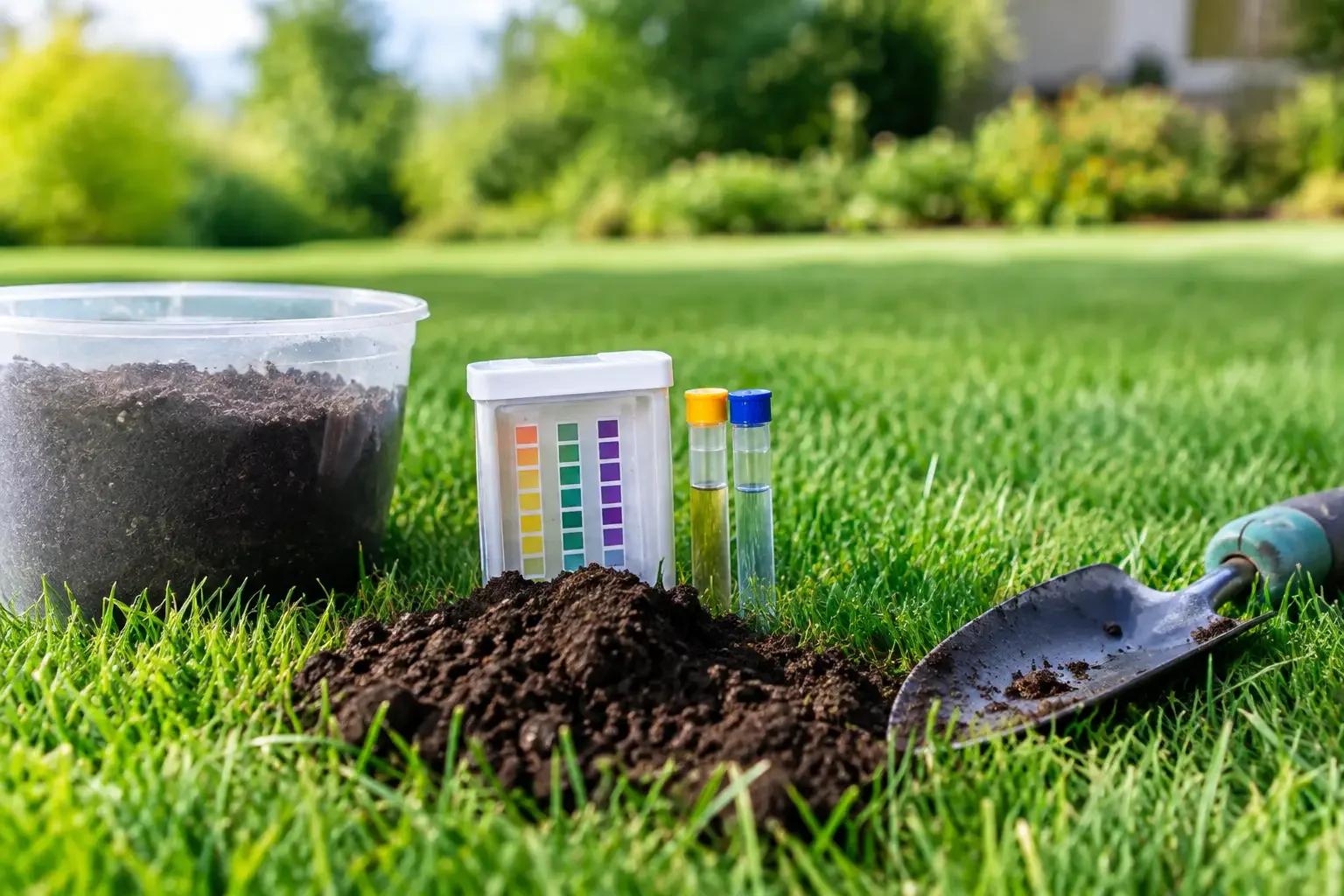
Use a clean hand trowel or soil probe to collect several small samples across one lawn area. Remove grass, leaves, mulch, and surface debris first. Take soil from roughly 3 to 4 inches deep, which is where most turf roots are actively working. Mix the samples together in a clean plastic bucket, let the soil air-dry if the lab instructs you to do so, and submit the amount requested.
If your front lawn gets full sun and your backyard stays shaded, test them separately. The same goes for a visibly struggling section versus the rest of the yard. Different irrigation patterns, tree roots, construction fill, and pet activity can create very different soil conditions within a single property.
Avoid sampling right after applying fertilizer, compost, or other amendments. Those products can skew the results and leave you with a report that looks better than the soil really is. If you are unsure how long to wait, follow the testing lab's instructions or ask your lawn care provider before sampling.
When to test your lawn soil
Early spring and early fall are usually convenient times to test because you can make adjustments before or during the main growing season. Fall is often an especially good window in Utah: summer stress is easing, and cool-season grasses have time to build roots before winter.
That said, a lawn problem does not always wait for the perfect calendar date. If you are seeing ongoing discoloration or poor growth, testing now is usually better than guessing until next season. Results may point to an immediate change in fertilization, watering, or soil conditioning.
For an established lawn that is performing well, testing every two to three years is often enough. Test more often if you are correcting a known problem, using significant amendments, establishing new turf, or managing a property with consistently poor soil.
How to read the results without overreacting
A lab report may include a lot of numbers, recommendations, and abbreviations. The goal is not to turn every homeowner into a soil scientist. It is to make one smart adjustment at a time.
If nitrogen is low, a properly timed lawn fertilizer may be the answer. If phosphorus is already adequate or high, adding a high-phosphorus product will not make grass magically greener. If pH is high, the recommendation may focus on improving nutrient availability instead of trying to dramatically change the pH of an entire established lawn. Utah's naturally alkaline soils can be stubborn, and trying to force a rapid pH shift can create more trouble than it solves.
Low organic matter may point to a need for gradual improvement through appropriate compost, grasscycling, aeration, and sound watering practices. Compaction is another common culprit. A compacted lawn sheds water, limits root growth, and makes fertilizer less effective. Core aeration can help, but it is not a cure-all for every brown patch.
Be cautious with one-size-fits-all advice. A soil test explains the chemical side of lawn health, but it does not replace checking sprinkler coverage, mowing height, sun exposure, pests, or disease. Healthy turf is a system, not a bag of fertilizer.
Put the test results to work
Once you have recommendations, timing matters as much as product choice. Cool-season lawns generally respond best to fertilization during active growth, especially in spring and fall. Applying too much nitrogen during hot weather can stress turf, encourage weak growth, and increase watering demands.
Watering should support the plan, not wash it away. Deep, less-frequent watering usually encourages deeper roots better than daily shallow watering, though the right schedule depends on soil type, temperature, sprinklers, shade, and local watering rules. Check that water reaches dry areas evenly before blaming the soil.
If weeds are part of the problem, a thicker, healthier lawn is one of the best long-term defenses. Weed control works better when turf has the nutrients, roots, and mowing conditions to compete. It is a lot easier to keep weeds out of a strong lawn than to constantly rescue a weak one.
For homeowners who prefer help interpreting results, a local lawn professional can connect the report to the conditions in your yard. Safe Chem Pest can tailor fertilization and weed control around what your lawn needs rather than treating every Utah property as identical. That means clearer recommendations, fewer unnecessary applications, and a plan that makes sense for your grass.
The goal is better soil decisions, not more products
The best result from a soil test is not a shopping list. It is confidence. You know whether your lawn needs nutrients, better access to nutrients, improved watering, aeration, or a closer look at another problem entirely.
Before the next round of fertilizer goes down, take a sample and let the soil have its say. Your lawn has been giving you clues all along. A test simply translates them into a practical next step.