
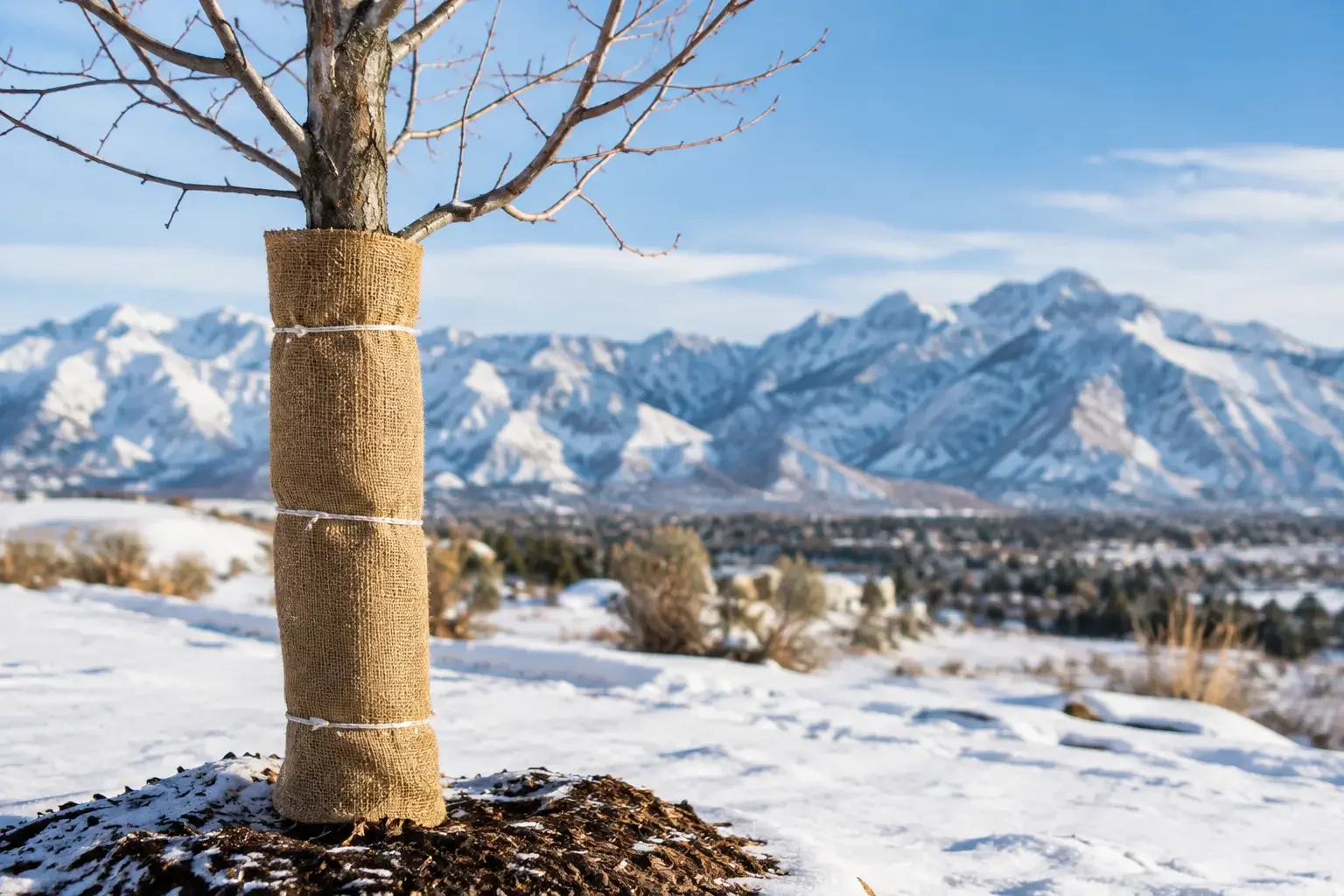
A bright Utah winter day can be harder on a young tree than a gray, snowy one. Sun reflecting off snow warms bark on the south and southwest side, then temperatures drop fast after sunset. That repeated expansion and contraction can split bark, stress roots, and leave a tree looking rough when spring finally arrives. Knowing how to protect trees in winter comes down to managing moisture, temperature swings, physical damage, and the animals that see your landscaping as a free buffet.
Start Before the Ground Freezes
The best winter protection happens in fall, before the soil becomes too hard to work. A healthy tree enters winter with better moisture reserves and fewer weak branches, so it is less likely to struggle through a dry, windy season.
Water deeply before a hard freeze, especially for trees planted within the last three years. Newly planted trees do not yet have the broad root system that established trees use to find moisture deeper in the soil. Give water slowly at the root zone rather than spraying the trunk or foliage. The goal is moist soil, not puddles around the base.
Mulch is one of the simplest helpful steps. Spread a 2- to 4-inch layer of wood chips or other organic mulch over the root area, keeping it several inches away from the trunk. Mulch moderates soil temperatures, reduces moisture loss, and helps protect shallow roots. Do not pile mulch against the bark in a volcano shape. That traps moisture against the trunk and can invite decay, insects, and rodents.
Avoid heavy late-season fertilizing. Pushing tender new growth shortly before freezing weather is not a favor to your tree. If your tree needs nutrition, use a plan based on its species, age, soil conditions, and growth pattern rather than applying fertilizer just because winter is coming.
How to Protect Trees in Winter From Sunscald
Thin-barked young trees are the usual sunscald victims. Maples, fruit trees, lindens, honey locusts, and some ornamental trees can be especially vulnerable, though any recently planted tree may need help. Look for damage on the south or southwest side of the trunk: sunken, cracked, discolored, or peeling bark that becomes noticeable in late winter or spring.
Use a light-colored commercial tree wrap from late fall through early spring. Start near the base of the trunk and overlap the wrap upward to the first set of branches. The pale surface reflects sunlight and reduces rapid temperature changes in the bark.
Remove the wrap once freezing nights are mostly over. Leaving it on through warm weather can trap moisture and provide hiding places for insects. The wrap is seasonal protection, not a permanent accessory.
For some fruit trees, a properly applied white trunk paint or protective coating may be another option. This is more specialized than wrapping, so follow the product label and make sure it is intended for tree trunks. Regular household paint is not the answer.
Keep Roots Watered During Dry Spells
People often think snow handles all winter watering. Sometimes it helps. But Utah winters can bring dry stretches, powdery snow that adds little moisture, and freeze-thaw periods that pull water from soil. Evergreens are particularly vulnerable because they continue to lose moisture through their needles during winter.
When daytime temperatures are above freezing and the soil is not frozen solid, water established trees about once a month during prolonged dry weather. Young trees, evergreens, and trees planted in exposed areas may need closer attention. Water at the drip line, which is roughly the area beneath the outer reach of the branches, because that is where many absorbing roots are located.
Skip watering if the ground is already saturated or covered by deep, wet snow. Too much water can be just as unhelpful as too little. If you are unsure, pull back a little mulch and check the soil a few inches down. It should feel cool and slightly damp, not dusty dry or soggy.
Prevent Animal and Rodent Damage
When natural food gets scarce, rabbits, voles, mice, and deer can turn to tender bark and twigs. A little nibbling can become a big problem when damage circles the trunk. This is called girdling, and it can cut off the tree's ability to move water and nutrients.
Install a physical trunk guard around young trees before snow accumulates. The guard should extend from the soil line to above the expected snow level, since rabbits and rodents can stand on packed snow to reach higher bark. Leave enough room for air circulation, and check that the guard is not rubbing tightly against the trunk.
Deer pressure depends heavily on your neighborhood. If deer regularly visit your yard, a trunk guard alone may not protect low branches or buds. A temporary wire cage around the tree may be the more reliable choice for young or newly planted trees. Repellents can help, but they need reapplication after snow or rain and tend to work best as a backup to a physical barrier.
Do not forget rodents beneath the snow. Keep mulch away from the trunk, clear heavy weeds and grass around the base, and inspect guards occasionally. A quiet little mouse can cause an expensive amount of damage when nobody is looking.
Be Careful With Snow, Ice, and Wind
Branches do not need to be completely snow-free. Light snow can actually insulate and is usually nothing to worry about. The problem is wet, heavy snow that bends branches beyond their normal shape, particularly on multi-stem evergreens and broadleaf shrubs.
If branches are bent under heavy snow, gently brush snow off using an upward motion with a broom. Do not shake frozen branches or try to knock off ice. Frozen wood is brittle, and an aggressive rescue can create the break you were trying to avoid.
For narrow evergreens with multiple leaders, loosely tie branches with soft, wide tree tape or fabric designed for plants. This can reduce splaying under heavy snow. Do not use wire, rope, or anything that can cut into bark. Remove temporary ties in spring so branches can resume their natural growth.
Inspect larger trees for dead, cracked, or hanging limbs before storm season. Removing obvious hazards while conditions are safe can prevent a branch from landing on a roof, car, fence, or person later. Major pruning and high branches are not a DIY ladder project. A professional assessment is the safer call.
Protect Trees From Salt and Winter Chemicals
De-icing salt is rough on trees near driveways, sidewalks, and streets. Salt spray can brown needles and buds, while salt that washes into the soil interferes with roots. Evergreens along roadsides are common casualties, but deciduous trees can suffer too.
Use the least amount of de-icer needed for safety, and choose products labeled as less harmful to vegetation where practical. Do not expect any de-icer to be completely harmless. Sand or traction material can reduce slipping without adding as much salt to the soil.
Where splash from a driveway is unavoidable, install a burlap screen or similar breathable barrier on the salt-facing side of a vulnerable tree. Keep the barrier away from foliage, and secure it well enough to handle wind. In spring, water the area deeply when the soil thaws to help move accumulated salts below the root zone.
Prune With a Plan, Not a Panic
Winter is often a good time to identify dead or damaged branches, but timing depends on the tree. Many deciduous shade trees can be pruned during dormancy, while spring-flowering trees may lose next season's blooms if pruned at the wrong time. Fruit trees have their own timing and disease considerations.
What you can safely do now is remove clearly broken branches that present an immediate hazard and avoid making unnecessary cuts during severe cold. Never top a tree or remove large limbs just because they look inconvenient. Those shortcuts create wounds, weak regrowth, and more problems down the road.
If you spot tiny holes in bark, sawdust-like material, unusual dieback, or bark that peels away easily, take a closer look before spring. Insects are less active in winter, but their evidence can remain. A tree protection professional can help determine whether the issue is winter stress, a disease concern, or a pest problem that needs treatment at the right time of year.
Give Young Trees the Most Attention
Mature, well-established trees are generally better equipped for winter than newly planted ones. Put your effort where it makes the biggest difference: trees planted in the past few years, thin-barked species, evergreens, fruit trees, and anything growing near pavement or road salt.
Safe Chem Pest helps homeowners in northern Utah protect trees with practical treatments and seasonal care, without making the process complicated. If your property needs pest service, mosquito control, lawn care, and tree care, bundling services can also lower the cost while keeping one more seasonal chore off your list.
A few minutes of watering, mulching, wrapping, and checking guards before winter settles in can spare a tree years of recovery. Your trees do not need a complicated winter routine. They just need the right protection in the spots where Utah weather hits hardest.