
A lawn can look thirsty, patchy, or strangely loose for weeks before the real problem shows itself. If you are wondering how to identify lawn grubs, do not start with a treatment. Start by checking what is happening below the grass. Grubs live in the root zone, and a quick look beneath the turf can save you from watering, fertilizing, or spraying for the wrong issue.
How to Identify Lawn Grubs in Your Yard
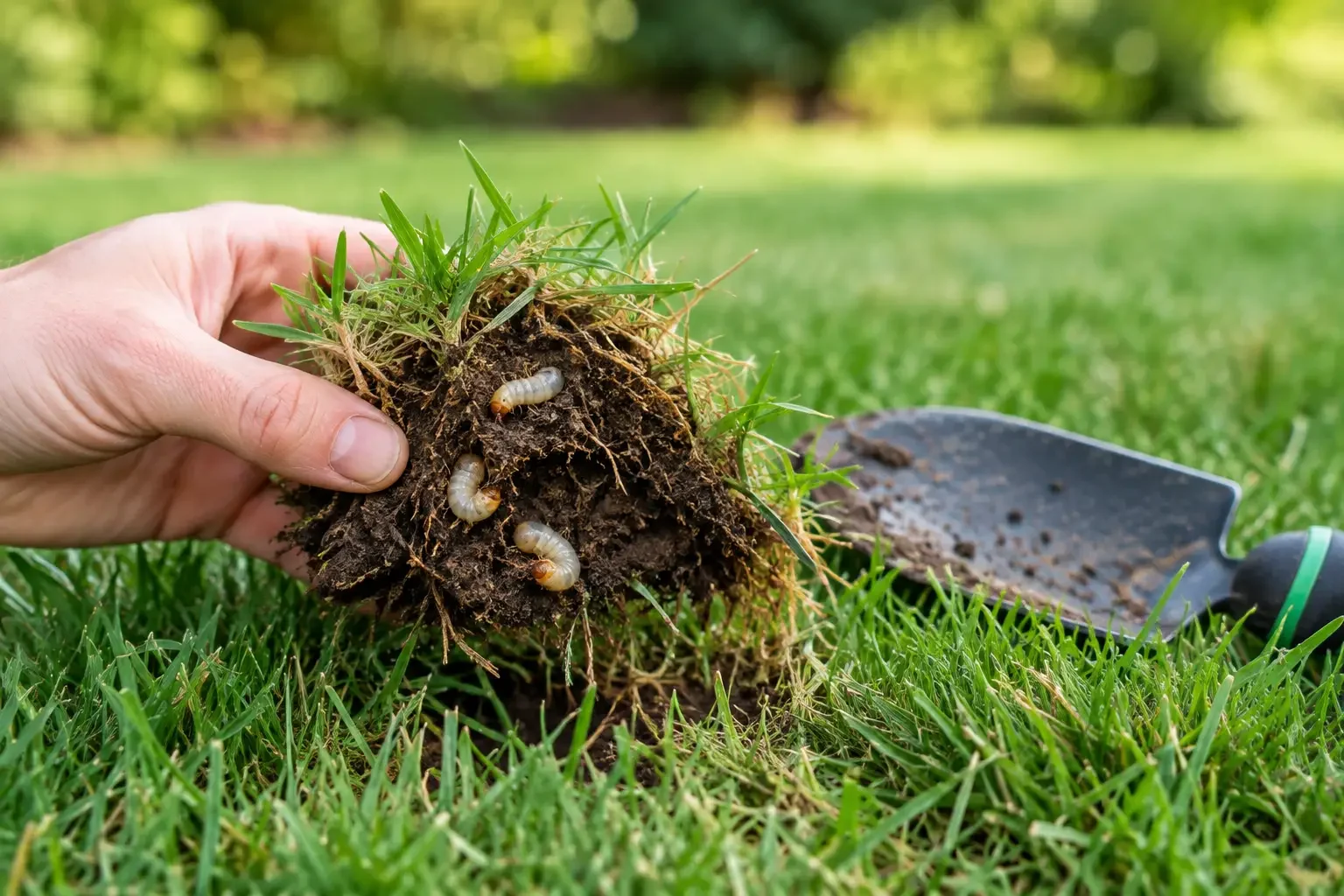
Lawn grubs are the immature stage of several scarab beetles, often including June beetles and masked chafers. They are creamy white, have a brown head, six small legs near the front of the body, and usually curl into a distinct C-shape when disturbed. Most are found a few inches below the soil surface, feeding on grass roots.
The key word is roots. Healthy turf is anchored firmly because its roots are holding it in place. A grub-damaged lawn may look brown or thin, but it can also feel spongy underfoot and lift like a loose piece of carpet. That loss of anchoring is one of the clearest signs that feeding is happening underground.
Grubs are most likely to cause obvious damage when they are larger and hungrier. In northern Utah, that commonly means late summer into early fall, with a possible second round of issues in spring when surviving grubs resume feeding. Timing varies with weather, turf type, irrigation, and the particular beetle in your neighborhood, so the lawn itself should have the final say.
Do the tug test
Choose the edge of a suspicious brown or thinning patch and gently grab a handful of grass. Pull upward. If the turf comes up easily and you can see short, chewed-off roots underneath, inspect the exposed soil for grubs.
A lawn with drought stress may be dry and brown, but it generally stays rooted in place. A lawn with grub damage often separates from the soil with surprisingly little effort. Think less like pulling weeds and more like lifting a small flap of sod.
Do not rely on one loose spot alone. Newly seeded areas, pet damage, shallow soil, poor irrigation coverage, and compacted ground can all weaken turf. Check several places around the damaged area before deciding grubs are the culprit.
Cut a small inspection flap
The most reliable way to confirm grubs is to inspect a small section of turf. Use a hand trowel or flat shovel to cut a three-sided flap about 12 inches by 12 inches. Peel it back carefully, keeping the grass and soil together, then look through the top 2 to 3 inches of soil.
You are looking for white, C-shaped larvae with a brown head. Count what you find, then place the flap back down and water it lightly. This small check is much better than treating an entire lawn based on brown grass alone.
One or two grubs in a square foot does not automatically mean your lawn needs treatment. Healthy, well-rooted turf can tolerate a low number of grubs. Damage becomes more likely when counts are consistently higher across multiple spots and the grass is already pulling loose or declining.
Signs That Point to Grub Damage
Grub problems rarely announce themselves with a neat label. Instead, watch for a pattern of symptoms that build on each other. Irregular brown patches that do not improve after normal watering are common, especially when surrounding grass looks fine. Turf may feel soft or bouncy because the roots have been eaten away.
Another clue is animal activity. Skunks, raccoons, crows, and other birds may dig, peck, or roll back sections of turf while searching for a meal. Their damage can be frustrating, but they are often responding to something already in the soil.
Still, animal digging is not proof. Birds also hunt earthworms, and skunks will investigate lots of things that are not grubs. Confirm the presence of larvae before assuming your lawn has a full-scale grub infestation.
Here are four signs that are most useful when they appear together:
Irregular patches of wilting, thinning, or browning grass
Turf that lifts easily because roots are short or missing
C-shaped white larvae in the upper few inches of soil
Increased digging or feeding activity from birds, skunks, or raccoons
What Looks Like Grub Damage but Is Not
A brown lawn is not always a grub lawn. Utah lawns deal with heat, alkaline soil, irrigation problems, pet urine, lawn disease, and compacted ground. Each can create thin or discolored spots without a single grub involved.
Drought stress usually follows sprinkler patterns. You may see dry strips along a lawn edge, browning around heads that are clogged or misaligned, or larger areas where water simply is not reaching. Dig down a few inches. Dry, dusty soil points more toward an irrigation issue than root-feeding insects.
Fungal disease can create circles, rings, or patches with active discoloration around the edge. Unlike grub damage, disease may leave roots intact. Compaction can also make grass thin because water and oxygen cannot move through the soil well. The turf may be difficult to pull up, rather than loose and detached.
Billbugs are another possible lawn pest. Their larvae are legless and do not have the classic white C-shape of a grub. If you find small, white larvae without legs inside grass stems or near the crown of the plant, the diagnosis may be different. That distinction matters because timing and treatment choices can change.
When to Check for Lawn Grubs
You can inspect your lawn any time you see suspicious damage, but late summer and early fall are often the best times to find actively feeding, larger grubs. Spring inspections can also reveal overwintered larvae that are feeding before they pupate.
Avoid checking only after a hot, dry stretch. Water-stressed grass can mimic grub damage, and dry soil makes digging harder. If possible, inspect after normal irrigation or a light rain, when the soil is workable and you can see roots clearly.
If your lawn looks rough in midsummer but you find only tiny grubs, immediate treatment may not be the best move. Some products work best preventively, before young grubs grow large. Others are intended for active infestations. Using the wrong approach at the wrong time is how homeowners spend money and still end up with a sad-looking lawn.
What to Do After You Find Grubs
First, assess the scope. Check a few locations in the affected area and a few spots in healthy-looking turf nearby. A small, isolated population in otherwise healthy grass may be something to monitor. Repeated higher counts, loose turf, and visible damage call for a more deliberate plan.
Watering and proper mowing will not kill grubs, but good lawn care helps turf tolerate stress and recover once the root feeding stops. Avoid cutting grass too short, and correct obvious irrigation gaps. A thick, healthy lawn is simply harder for pests to push around.
For active damage, treatment should match the pest, life stage, and season. Read product labels carefully and follow application and watering directions exactly. More product is not better, especially around children, pets, pollinators, and nearby garden beds. Targeted treatment is usually the smarter route.
If you would rather not play lawn detective with a shovel, a professional inspection can confirm whether grubs are actually present and whether treatment is warranted. Safe Chem Pest can help homeowners in Weber, Davis, and Salt Lake counties sort out grub damage from the many lawn issues that look similar. There is no benefit in treating a mystery.
A small inspection today can prevent a bigger repair job later. Pull back one flap of turf, look at the roots, and let the evidence - not a brown patch or a nervous guess - tell you what your lawn needs.