
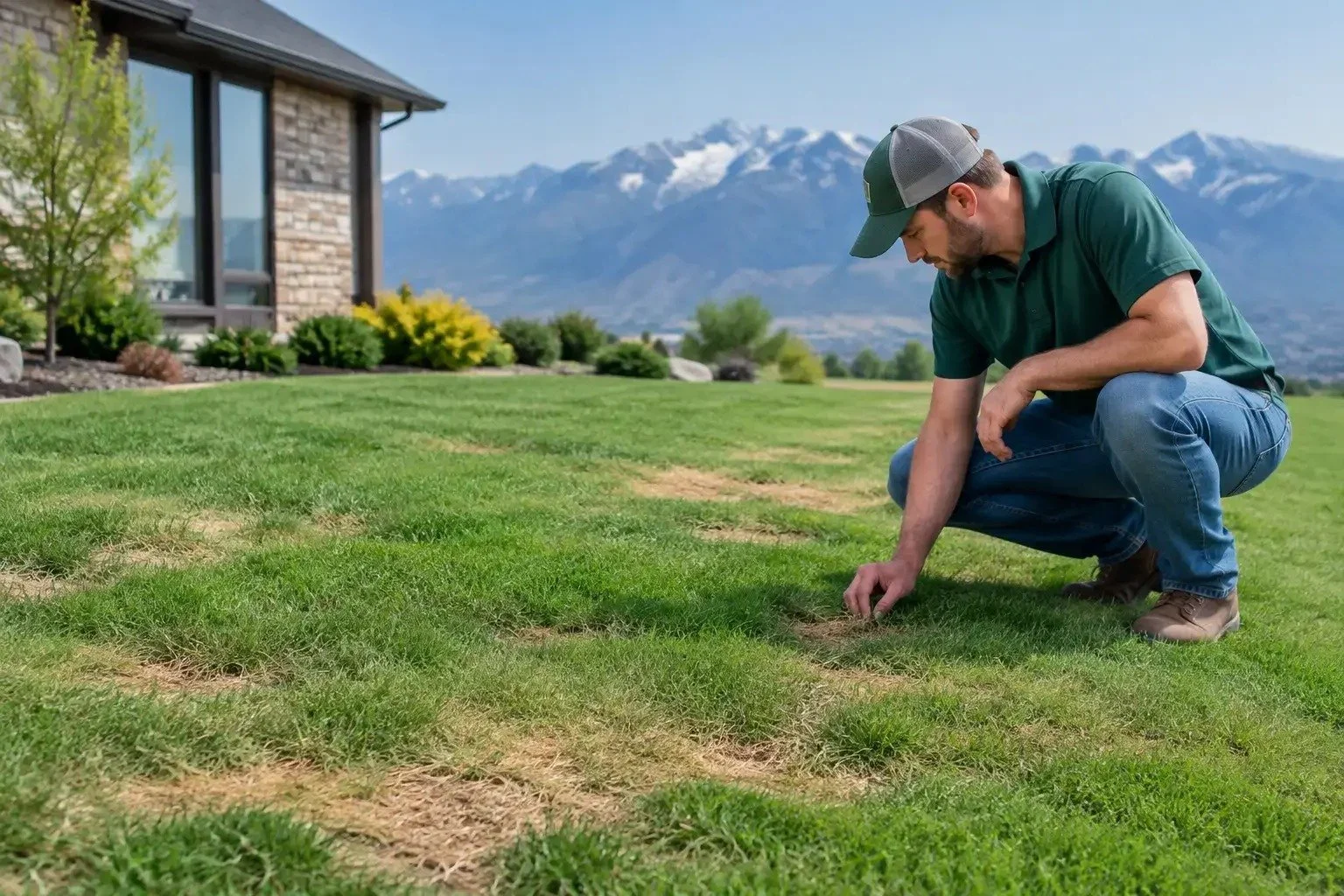
A lawn can look perfectly fine on Monday and develop a suspicious brown circle by the weekend. That is frustrating, especially when you are watering, mowing, and trying to keep the yard looking decent. Most lawn patch causes are not random, though. The size, color, location, and timing of the patch usually provide a pretty solid clue about what is happening below the blades.
In Utah, lawns deal with dry summers, alkaline soils, compacted ground, temperature swings, and irrigation systems that do not always water as evenly as we think they do. Before throwing down more seed or fertilizer, take a minute to identify the likely cause. Fixing the wrong problem can waste money and occasionally make the patch worse.
1. Uneven Watering or Irrigation Coverage
Water is the first thing to check because it is one of the most common and easiest-to-miss lawn patch causes. A sprinkler head can be clogged, tilted, blocked by taller grass, or simply not reaching the outer edge of a lawn. A brown patch near a sidewalk, driveway, fence, or slope often points to inadequate water coverage.
Run each irrigation zone during daylight and watch it. Do not assume the system is doing what it did last summer. Look for dry strips between sprinkler patterns, heads spraying the pavement, and areas where water pools instead of soaking in. Utah’s summer heat can turn a small watering gap into a visible brown patch quickly.
Watering too often can create trouble too. Frequent shallow watering encourages shallow roots, which struggle when temperatures climb. Most established lawns do better with deeper, less frequent watering that moistens the root zone without keeping the surface constantly soggy. The right schedule depends on grass type, soil, weather, and shade, so there is no magic timer setting for every yard.
2. Compacted Soil and Thatch
If a patch receives water but still looks thin, stressed, or slow to recover, the issue may be underfoot. Soil compaction is common in high-traffic areas, along walkways, near play sets, and where pets regularly run. Compacted soil prevents water, air, and nutrients from moving down to the roots. The grass is basically trying to grow in concrete with better marketing.
Thatch can create a similar problem. Thatch is a dense layer of dead stems and roots between the soil and living grass. A thin layer is normal, but too much can keep water and fertilizer from reaching the soil while creating a cozy hiding place for pests and disease.
Core aeration is often the practical fix for compacted lawns. It removes small plugs of soil and helps improve airflow and water movement. If thatch is unusually thick, dethatching may be appropriate, but it is more aggressive and can stress a lawn. Timing matters, especially during hot weather, so avoid tearing up a struggling lawn in the middle of a July heat spell unless there is a good reason.
3. Dog Urine and Pet Traffic
Small, round brown spots with a darker green ring around the outside are often associated with dog urine. The concentrated salts and nitrogen can burn the grass in the center, while diluted nitrogen at the edge creates that extra-green halo. It is an annoying little science experiment that nobody asked for.
The best response is fast dilution. If possible, water the spot soon after your dog urinates. Training a dog to use one less-visible area of the yard can also help protect the rest of the lawn. Reseeding may be needed once the damaged grass is dead, but seed will not solve the problem if the same spot keeps getting repeated use.
Heavy pet traffic can also wear pathways into the grass, especially near gates, patios, and back doors. In those areas, a small gravel path, pavers, or a durable ground cover may be more realistic than repeatedly reseeding a route your dog uses twenty times a day.
4. Lawn Insects Feeding Below the Surface
Insects can cause patches that look like drought damage, even when irrigation seems fine. White grubs, billbugs, and other turf-feeding insects damage grass roots or stems, making turf weak enough to brown, thin out, or pull up easily. If you can lift the grass like loose carpet, root damage deserves a closer look.
Check the soil around the edge of the damaged area rather than only in the dead center. Peel back a small section of sod and look for white, C-shaped grubs or other visible insects. Not every bug in the soil is a problem, and a few grubs do not automatically call for treatment. The question is whether the pest activity is high enough to cause actual lawn damage.
This is where targeted treatment beats guesswork. Applying insect control without confirming a pest can be unnecessary, while waiting too long on a genuine infestation can leave a larger repair job. A lawn professional can help identify whether insects are the issue and recommend treatment that fits the season and the level of activity.
5. Fungal Disease
Fungal lawn diseases can create circular patches, straw-colored areas, reddish threads, or rings that seem to spread outward. They are more likely when grass stays wet for long periods, air movement is limited, thatch is heavy, or fertilizer use is out of balance.
Overnight watering is a common contributor. When leaves stay wet into the morning, fungus has more opportunity to grow. Watering early in the morning gives grass time to dry during the day. Also, avoid overfertilizing a stressed lawn. Extra nitrogen may produce a quick burst of green growth, but it can make certain disease issues worse.
Disease is not always easy to identify by appearance alone. Several problems can look alike from across the yard, including drought stress, insect damage, and pet spots. If a patch is expanding despite proper watering, or if you see repeated circles and unusual leaf discoloration, it is worth getting an informed diagnosis before applying products at random.
6. Weed Pressure and Chemical Damage
A bare or thinning patch is not always caused by something attacking the grass. Sometimes the grass is losing the competition. Weeds can crowd out turf, especially where soil is compacted, irrigation is uneven, or grass is already thin. Crabgrass, bindweed, and broadleaf weeds are often symptoms of an underlying lawn condition, not just the main problem.
Herbicide damage is another possibility. Weed control products can injure desirable grass if they are applied at the wrong rate, during extreme heat, or when the lawn is already stressed. Drift from a nearby application can also affect a section of turf, often leaving an oddly shaped patch or damage along a border.
Read product directions carefully and avoid treating a lawn just because it has a rough week. A targeted plan based on the weed type, grass condition, and temperature is safer than an all-out spray campaign. For families with kids and pets, targeted applications also make practical sense: use what is needed, where it is needed.
7. Heat, Shade, and Seasonal Stress
Utah lawns often face two opposite problems in the same yard. Sunny areas can bake during the afternoon, while shaded areas under trees may stay damp, thin, and vulnerable to disease. Grass growing next to south-facing concrete has a particularly rough assignment because reflected heat can dry the soil faster than the rest of the yard.
Seasonal stress can also reveal weak spots. Cool-season grasses commonly slow down in peak summer heat, then recover as temperatures moderate. If the grass is not truly dead, avoid panic-seeding in July. Focus first on proper watering, mowing height, and reducing stress. Fall is usually a better time for aeration and overseeding because conditions are friendlier for new roots.
Tree roots can complicate things further. They compete with turf for moisture and nutrients, while dense canopy shade reduces the sunlight grass needs. In some heavily shaded areas, adjusting expectations is smarter than repeatedly fighting nature. A different ground cover, mulch bed, or landscape feature may perform better than a lawn that never gets enough light.
How to Narrow Down the Cause of a Lawn Patch
Start with the basics: check the irrigation, inspect the soil, look for insects, and notice the patch pattern. A crisp circle may suggest pet urine or disease. A dry strip may point to sprinkler coverage. Turf that lifts easily can indicate root-feeding insects. A worn path usually tells its own story.
Then consider what changed recently. Did you fertilize, spray weeds, mow very short, add a new pet, adjust sprinklers, or experience a stretch of hot weather? The answer is often hiding in the calendar.
For homeowners in Weber, Davis, and Salt Lake counties, a professional lawn evaluation can take the guesswork out of stubborn patches. Safe Chem Pest offers lawn fertilization and weed control designed for local conditions, with straightforward service options and no long-term contract pressure. If your lawn issue may involve insects, weeds, or overall turf health, getting the cause right first gives your grass its best chance to grow back strong.
A patchy lawn is rarely a lost cause. Treat it like a clue, not a mystery: look at where it formed, how it is changing, and what your lawn has been through lately. That little brown spot may be the lawn’s way of asking for a sprinkler adjustment, healthier soil, or a bit less enthusiasm from the family dog.